Tuesday, August 24, 2021

Who Among Us Is The Greatest?

Our family recently visited the National Baseball Hall of Fame in Cooperstown, NY. Though not an avid fan of the sport myself, I nevertheless appreciate the history, culture, and leisure of the sport, so I happily towed along with my husband and kids. 

One of our first stops was the Grandstand Theater to watch their welcome film: Generations of the Game. The video featured some of baseball’s greats and their reactions to their most memorable moments. 

One player, reflecting on his record-breaking steal, gave a wide grin and exclaimed, “I knew then, at that moment, that I was the greatest in the world!” Another player explained, “Every time I went out on the field, I wanted to be the very best. I wanted everyone in the crowd to look at me and say, ‘That player is the best one out there!’” 

Those words unnerved me and followed me as we continued our tour of the museum. I opened the museum guide and noticed that the third floor featured a place called “Sacred Ground:” a celebration of the most famous ballparks. We passed various baseball memorabilia, relics of baseball’s greats. Then we entered the famous Plaque Gallery, with its oak walls lined with bronze plaques honoring the greatest players, managers, umpires, and executives. If the ballpark is considered “sacred ground,” then this Gallery must be the shrines to baseball’s canonized saints.

 

null

If you think about it, baseball even has its own liturgy, an expected order of events that never deviates, from the singing of the National Anthem to the seventh inning stretch. Everyone knows that a player can’t skip first base and run directly to third. There are norms and rituals that exist in its unique “liturgy,” which has been established over the generations. Furthermore, as the Baseball Hall of Fame strongly indicates, there is tradition here: a rich history of comebacks, record setters, and greats. 

Of course, this presents a danger if taken to the extreme. Baseball—or any sport, for that matter—can become one’s religion. The first commandment is the first out of ten for a reason. Any good carried to an extreme, surpassing God in importance, becomes an evil. 

Whenever we set ourselves up as gods—as “the greatest in the world,” so to speak—we set ourselves up for failure: pride, after all, comes before the fall. To strive for excellence is certainly laudable, but one must caution against seeking glory for one’s own benefit. Sports are naturally competitive, but athletes should balance excellence with humility and individual success with team cooperation. Competitors should ask themselves: am I seeking self-glorification? Or am I doing my best in order to glorify God? Beware of pride! St. Augustine, when questioned about the worst three deadly sins, replied, “Pride, pride, and pride!” 

There was another baseball player interviewed during that welcome film who presented a different, refreshing view. He came from a Latin American country and reminisced on how far he came from an impoverished boy tossing the ball in the streets to playing on a major-league team. Yet, this particular player didn’t boast of this astounding change of circumstances as a credit to himself. Rather, he began laughing and marveled, “I just wanted to have fun and play ball!” He continued to describe baseball as a gift from God.
null

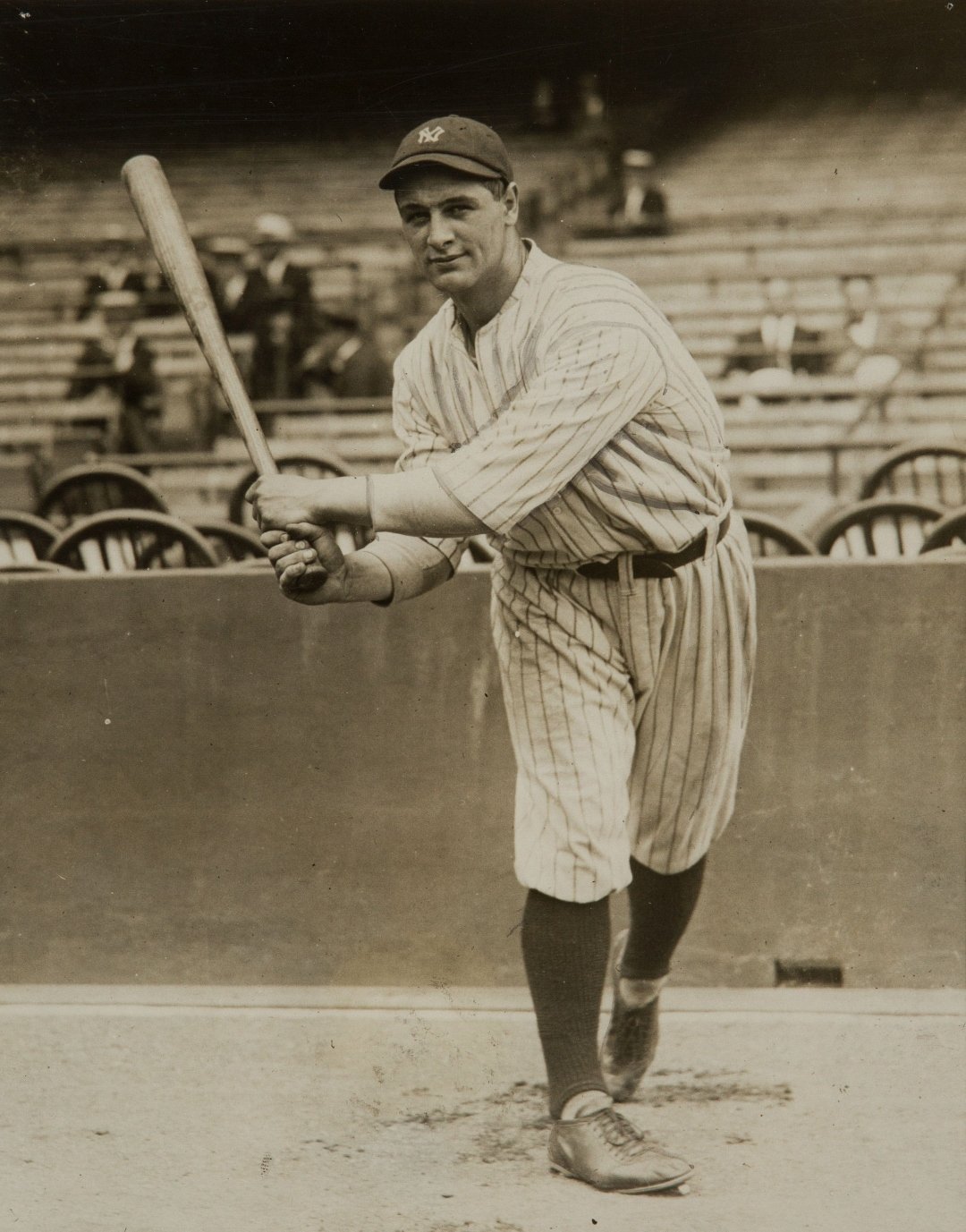
 Similarly, there was also a clip of Lou Gehrig, giving his memorable farewell speech on July 4, 1939 at the end of his career, facing an illness that would take his life only two years later. Gehrig pronounced, “Today I consider myself the luckiest man on the face of the earth.” He didn’t complain, express regret, or show bitterness; he was humbly grateful for the gift of having played. 

Walking through the Gallery at the Baseball Hall of Fame, seeing all those rows of plaques and names, I wondered: which player was the greatest? How, exactly, should one distinguish “greatness?” Well, Our Lord says,

“The greatest among you must be your servant. Whoever exalts himself will be humbled; but whoever humbles himself will be exalted” (Matthew 23: 11-12).

Last evening I returned from a walk to see my husband playing baseball with our children on the front lawn. Our 3-year-old stood at home plate, poised for the next pitch while the other children cheered him on. As my husband pitched the ball, I remembered him telling me about the times as a young boy when his father would play baseball with him.  

Perhaps this is where the greatness of baseball lies—not so much in the spectacular feats of a small percentage of individuals (as impressive as those may be), but in the father/child moments of playing ball as the summer dusk draws on … the Little Leaguers clapping hands and saying, “Good game!” … the joy of making your first catch. 

Baseball—like any tradition (the greatest of which is our faith)—is passed down from one generation to the next. It is that humble serving of future generations that preserves the traditions and betters us all. Greatness lies in service, which is ultimately an expression of charity. This is where true victory triumphs.


Monday, August 9, 2021

Forgiveness: A Paradox of Love

 We have a daily ritual that occurs every day when the kids are all home together. For some reason, our children always offer the following exchange in a particularly high-pitched voice:

I’m sorryyyyy.
I forgive youuuuu.

Some days I hear this conversation a dozen times! The repetition helps me reflect on the true meaning of forgiveness.

Forgiveness Is Required

Wouldn’t it be convenient, nursing a hurt, to find a degree of consolation in the knowledge that I am the wounded one — the victim — and, as such, I have a kind of “right” to anger? I know that I’ve felt this kind of self-justification. “Look at what she did to me! Of course I shouldn’t speak to her again!” I’m the injured party: I’m entitled to this animosity.

But if we don’t take concrete steps to forgive, that resentment and bitterness, festering within, will end up condemning you and me. We pray in the Our Father, “Forgive us our trespasses, as we forgive those who trespass against us.” The way we forgive is the way God will forgive us.


silhouette of woman praying, backlit in front of a pink curtain


Forgiveness is Not a Feeling

For the longest time, I thought I hadn’t forgiven the person who hurt me because, well, I still felt hurt! However, we are human beings and we have emotions. While we can’t control these feelings, we can direct them. I’ve often told my children, “It’s okay to feel angry. It’s not okay to hit or scream in your anger.” It’s okay to feel hurt; it’s not okay to fuel the fire of resentment.

Forgiveness is an act of the will, not the emotions. It is mentally deciding: Yes, I will forgive this individual who wronged me. In time, a feeling of forgiveness may follow, but it might take years. The father of a boy possessed by a demon exclaimed to Jesus, “I do believe, help my unbelief!” (Mark 9:25). We might similarly pray, “Lord, I do forgive! Help my unforgiveness!” 

Forgiveness is a gift: both for the wrongdoer and the wronged. It is freeing! If you sincerely want to forgive and ask God for that gift, He will answer your prayer, in His time, bringing you peace and healing.

Forgiveness Is Work

With my children, forgiveness works pretty quickly. They exchange their lines and, moments later, have resumed their game, the grievance completely forgotten, and friendship restored.

We adults have a harder time with forgiveness, in part because the hurt isn’t over a stolen toy, but sometimes something that wounds us to our inner core. It’s not enough to decide, “I forgive this person” once and be done with it. Forgiveness is daily work.

When I struggled with forgiving someone, I received this advice: pray for the person who hurt you for forty days. The idea, of course, is that forty days trains your will to intentionally forgive, which over time becomes a habit. Forgiveness is purposeful work.


woman crying


Sometimes the work of forgiveness might involve trying on a new perspective. It’s tempting to mentally villainize your wrongdoer (while simultaneously canonizing yourself!). Yet, now that time has passed, when I revisit painful situations, I can put aside my pride and realize that my words and actions also played a role in what happened. This doesn’t excuse the person from what he did, but it does help me understand that I’m not perfect either.

Of course, there are instances where the victim is 100% a victim. Even here though, working to understand the wrongdoer may be helpful. What kind of upbringing did the person have? Did he have a loving home with caring parents? Did she suffer from mental illness or depression? Sometimes we will never know what kind of crosses someone else may be carrying … and that’s why we must forgive, not just seven times, but seventy-seven times — always! (Matthew 18:22) 


20210809 CSpellman 2


Forgiveness is Not Always Forgetting

So, now that you’ve chosen forgiveness, things can go back to normal and you can carry on as though nothing ever happened?

No, not always. Forgiveness does not mean the wrongdoer is excused from all blame and punishment. God is merciful and He is just.

We need to pray to the Holy Spirit for prudence and right judgment when deciding how to navigate relationships after forgiveness. What applies to one situation does not apply to all. In prudence, one may need to remember certain aspects of what happened in order to prevent them from happening again. Yet in charity, one must forget them all. It is a paradox of love.


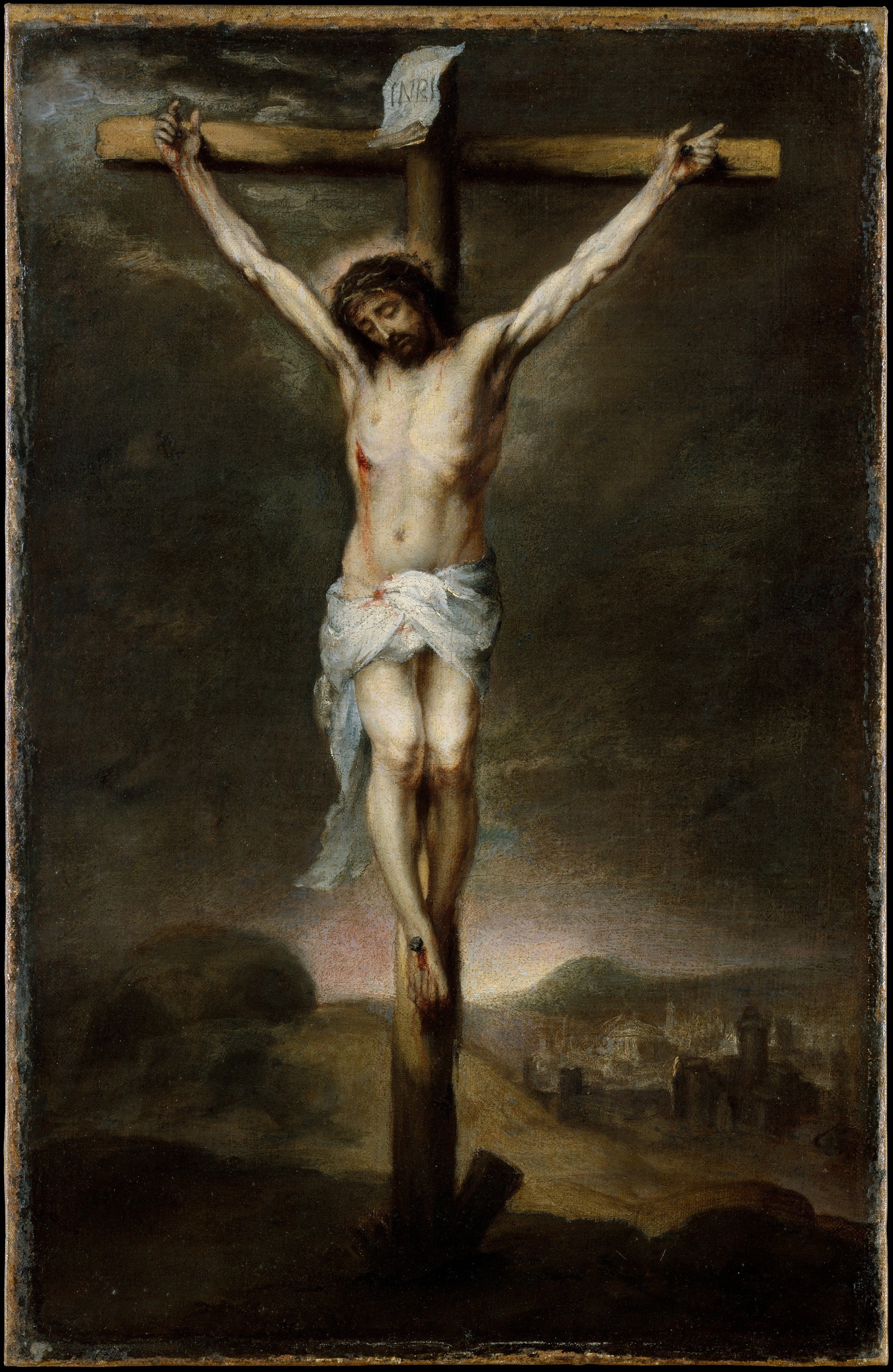
"The Crucifixion" by Murillo (1675)


In the end, the greatest example of forgiveness is Christ on the cross, praying, “Father, forgive them, they know not what they do” (Luke 23:34). The “they” Christ refers to are His crucifiers … which also includes you and me. Was it not our sins that caused Christ His suffering and death? If Christ can forgive us … how can we not forgive our brothers and sisters?


Wednesday, July 14, 2021

Lessons from The Cypresses Believe in God

If people talk about how the United States is politically divisive today, we have something we can learn from Spain in the early 1930s.  Jose Maria Gironella’s The Cypresses Believe in God is the Spanish version of the Russian novel: a myriad of characters, interacting and interrelating in various ways, with a long, historical plot that weaves in and out of their contrasting lives.  The protagonist is Ignacio Alvear and the story generally follows his growth into adulthood and the life of his family, living in Gerona.  The novel covers the years immediately preceding the Spanish Civil War: 1931-1936.  The author notes in the beginning that Spain is a complex country and that “there are in this land thousands of possible ways of life.”

What were some of those possible ways of life?  


There are anarchists, such as Ignacio’s cousin, who says, “You have to wipe out whatever stands in the way of the good of mankind.  So that tomorrow there will be a different kind of blood.”  Believing the individual perfect, the anarchists seek complete freedom.  “Jose went on to say that the means were unimportant in the achievement of freedom.  It was necessary to destroy all the fictions and limitations that society had created and imposed.”


There is also the Socialist Party.  Ignacio, though raised in a conservative Catholic family, has leanings toward this ideology, which become stronger as he takes classes from two teachers who are Socialists themselves.  David and Olga are a married couple, but they were never married in the Church.  They run a school called the Free School and put together a Manual of Pedagogy, their vision of education of children.  They advise not burdening children with something that would later cloud their judgment: no teaching, therefore, about evil, conscience, or religion until the child has reached at least ten years old.  While this education must wait, David and Olga encourage an early presentation about sexual education, using anatomical figures.  


The Communist Party is an active force, led by a man named Cosme Vila, who claims that he is neither moved by love nor hate, but only by discipline.  Cosme Vila presents the Communist Party program: a six-hour work day, labor’s control of industry, and a profit-sharing plan.  Politically, all current authorities should be dismissed and new elections held where only those holding workers’ cards are eligible to vote.  He calls for co-operatives that would distribute food and oil to people, free of charge to members of the Communist Party.  Though he favors the complete eradication of the Catholic Church, Cosme Vila realizes the opposition to that and instead calls for a prohibition to priests wearing cassocks and the closure of all convents not engaged in charitable works.


Some people are Freemasons and work toward an atheistic, anti-Church, secular society.  “Man with a capital, was free, the Absolute did not exist, because it ran counter to the achievement of evolution … In Gerona everybody wants to be Free, with a capital.”


On the far right are the Falangists (the Spanish fascist party).  Their purpose is to convince workers that they are not proletarians, but men, and that the economic factor isn’t the sole consideration.  Once people have their material needs met, they can address their more important spiritual needs.  The Falange have five points they emphasize: individual, family, municipality, fatherland, and God.


Ignacio is exposed to these different political theories and, as the reader, we see them through his eyes as he weighs them and discerns where he stands.  He struggles with questions about the poor: why do some people have cars and others do not?  One day he visits the slums and observes garbage, dilapidated houses, famished dogs running amuck, eyes full of suffering, and children playing with balls made of rags.  In the summers, the affluent visit private beaches while the impoverished stay in the hot, dusty streets of Gerona.  Ignacio struggles with these inequalities, yet he also has a strong formation in the Catholic faith, which his mother particularly cultivates in him.


Ignacio’s division within himself is a microcosm of the greater society in Gerona, which splits into factions and becomes more separated.  Even people of the same social class, with similar needs and concerns, join different political parties.  Each political party has its own headquarters and newspaper with its own advertisers, so that even commercially, people avoid buying from a company that supports the opposing political party.  


“To live each day in accordance with one’s ideas: this was the iron rule.  Nothing in this world would have persuaded a member of the UGT to put one peseta over the counter of a Radical.”   


In this confusion of various ideas and contrasting political theories, one of the main problems that arises is having the ability to understand the other person’s point of view.  Can we really see each other?  Ignacio comes to realize that behind the ideology, there is a person, an individual whose past forms his or her present.  While working at a bank, Ignacio observes that his fellow workers appear radically violent (someone, for example, mentions blowing up the bank on account of the unjust working conditions).  Yet, taken individually, each worker has his own personality: there is more to the story than just an ideology.  Ignacio even spies some of his co-workers at Mass on Christmas, though they had claimed to be atheists.


Ignacio was realizing that people are full of surprises.


Cosme Vila, the head of the Communist Party, had a father who hung himself because he couldn’t provide for his family.  El Responsable, the leader of the anarchists, has a wife in the insane asylum and visits her weekly.  At one point, Ignacio attends a meeting of the anarchists, where they discuss destroying the conservative printing press.  Ignacio opposes the idea, but during the conversation, he learns something about one of the anarchists: he suffered a terrible childhood. His parents abandoned him and he survived only by stealing chickens.  


Ignacio reached his home reflecting that there was bound to be a big difference in feelings about wrecking a printing press between a man who as a child had stolen chickens and one whose mother timed the boiling of eggs by the Creed. 


Understanding someone’s background gives important insight, as well as sympathy.  It doesn’t make wrongdoing right, but it does open the door (and heart) to seeing another’s humanity.  There are many instances in The Cypresses Believe in God where characters look past political allegiances to see a person in need.  When Ignacio’s teachers, David and Olga, are jailed, Ignacio’s mother (who vehemently disapproves of their teaching and political leaning) prepares a daily food basket for them.  Ignacio’s brother also asks her to prepare a basket for a communist who worked in the same art shop as he.  Then, at the end of the novel, David and Olga similarly extend a hand to help someone who, politically, should be their sworn enemy.  The chief of police, Julio, experiences this break-through of humanity while in the midst of interrogating Mateo, the leader of the Falange in Gerona.  Mateo is the son of a friend of Julio’s, as well as the boyfriend of Pilar, a young girl Julio has watched grow up.


Then suddenly he felt an unexpected emotion opening a breach in him.  He thought of Pilar.  He thought that Pilar loved the boy sitting before him.  And he thought, too, of Don Emilio Santos, with whom he had played so many games of domino at the Neutral.  The fact that those two persons, Pilar and Don Emilio, should be devoted body and soul to the Falangist suddenly touched Julio deeply.  He upbraided himself for having yielded to the temptation to use the light-reflector on the boy.


Conversely, the greatest danger is when people aren’t able to “see” each other.  Some characters find themselves acting in a way they never expected, spurned on by their political zeal.  On Election Day, Olga observes a group of nuns coming to vote.  They had hired a taxi so that the infirmed nuns could cast their votes as well.  Olga, infuriated, shouts out at them, “Pigs!”  She immediately wonders at her loss of control.  Cosme Vila prints an article in El Democrata, falsely accusing Brother Alfredo, a sexton at the school of Christian Brothers, of being a homosexual.  An angry communist and anarchist mob later attacks the school and kills Brother Alfredo.  The violence is not one-sided.  At one point, a group of Falangists violently attacks a German professor who criticized Spanish culture and temperament.  


“The capacity for hate that exists is terrible,” Ignacio went on.  “I am really ashamed.  There are thousands of Spaniards capable of any atrocity.”  


The worst example of all arrives at the end of the novel.  After a failed military coup on the Right, the anarchists and Communists seize control and drive about Gerona in cars armed with guns.  During the night they seize people who had supported the military uprising, and, taking them into the cemetery, shoot them.  One of the main reasons they work by night is so that they can’t see the person they kill.  The darkness takes away that person’s humanity.


Most of the militiamen were amazed to see how easy it was to kill a man or five men.  One had only to think the word ‘fascists,’ take aim at the heart or the head and fire--and that was all there was to it.  Besides, in spite of the stars, the night hid many things in the cemetery.  One could not see the eyes of the condemned person; that was the most important.


The Cypresses Believe in God is a very political novel that follows historical events in Spain.  Yet, it is also a narrative that focuses on the Alvear family.  I think Gironella purposely approached his work in this way, in order to illustrate the fundamental role of family in society and the political sphere.  Family is the basic building block of any society.  When the family is broken, so, too, is society.  Ignacio observes a direct parallel: the fewer the family ties, the stronger the violence; the greater family ties, the more moderation.  Within his own life, when Ignacio drifts from his family (the spiritual bedrock of his life), he falls into rash action and sin.  


It seems we observe this in our country now.  Indeed, there were many times in reading The Cypresses Believe in God that the historical events of Spain in the early 1930s felt reminiscent of the United States today (from censorship to election fraud to violence).  The noble struggle is to see the humanity in each other—especially in our enemies—and to keep working to protect and defend the family.  It may be the only way we will keep our own country from spiraling into a civil war.


Don’t ever forget my advice!  In the last analysis, love is always stronger than hate.  Make sure you are moved by love, not by the contrary.


Lessons from My Cousin Rachel

 There must be something in the nature of love between a man and a woman that drove them to torment and suspicion.


Author Daphne Du Maurier was known to me for her best-selling novel Rebecca, a book I devoured in my high school years and still love.  I haven’t revisited any of Du Maurier’s books since, which I now regret, since I couldn’t bear to put down My Cousin Rachel.  Du Maurier is a master of suspense, mystery, and foreboding.  There are no warm, fuzzy, happy endings here; she writes to unsettle and disturb, which in turn, prompt you to analyze the characters to see who may be in the right … if anyone.


My Cousin Rachel begins with a sympathetic protagonist.  Philip Ashley became an orphan as a young boy and subsequently was raised by his older cousin, Ambrose Ashley.  Ambrose owns a sprawling English estate and here Philip spent his childhood.  Ambrose had an unorthodox parenting style.  For example, he taught Philip his alphabet by giving a profanity for each letter.  A steadfast bachelor who has little regard for women, Ambrose ensures that his household contains only men.  As such, the home lacks any feminine touch: dust covers much of the furniture and the place smells like a dog kennel.  Ambrose, considering Philip his heir, prepares him for the management of the estate.  Philip, for his part, idolizes his older cousin and his main objective in life is to be just like him.  


I never had any desire to be anywhere but at home.


Of course, things abruptly change.  Ambrose’s doctor advises him to spend the winter abroad, in the dry, warm air.  During his third winter in Italy, Ambrose makes the acquaintance of his cousin, Rachel.  Rachel is a widow, her late husband having died in a duel.  She was left with a great deal of debt and an empty villa in Florence.  Like Ambrose, she has a love for gardening, which is how they first form a friendship.  A few months later, Ambrose writes to Philip that he and Rachel are married.


Philip’s initial reaction, which he feels guilty about, is jealousy.  Ambrose was his world and now he must share Ambrose with someone else … and not just anyone else, but a woman!  Philip paints pictures in his mind of Rachel: large and angular with a loud laugh; pale and covered with a shawl, an invalid confined to her chair; a curvy young woman with bouncing curls.  Philip despises all these images and suddenly his entire future and home seem to be in jeopardy.  


Philip’s only knowledge of what transpires in Italy between Ambrose and Rachel comes from Ambrose’s letters, which become increasingly concerning.  Ambrose mentions that he can only write when his wife is out of the house and that she watches him all the time.  Ambrose has also fallen ill with crippling headaches that drive him to almost madness and then leave him powerless in bed.  Philip has already decided to travel to Florence to be with Ambrose when, on his way out the door, he receives a final communication from Ambrose, written in scrawling, barely readable writing:


For God’s sake, come to me quickly.  She has done for me at last, Rachel my torment.  If you delay, it may be too late.  


Philip, in great trepidation, travels to Rachel’s villa in Florence, but quickly learns that Rachel has left.  Ambrose is also gone: he died, just a couple of weeks prior.  His cause of death is said to be a brain tumor, which a relative of his also died from.  Philip is stunned by the news.  He asks for Ambrose’s possessions, but learns that Rachel has taken all of them with her.  Philip is convinced that had he been there, Ambrose would not have died.  


I swore that, whatever it had cost Ambrose in pain and suffering before he died, I would return it, in full measure, upon the woman who had caused it.  I believed in the truth of those two letters that I held in my right hand.  The last Ambrose had ever written to me.  Someday, somehow, I would repay my cousin Rachel.


Returning home is a comfort to Philip, realizing that the estate now belongs to him (though, by a technicality, it does not pass into Philip’s full ownership until his twenty-fifth birthday in a few months’ time).  Not long after his return, however, Philip learns that Rachel has also traveled to England and wishes to see him, to bestow upon him all of Ambrose’s possessions.  Philip’s godfather points out to him that Rachel has inherited nothing from Ambrose: Ambrose never rewrote his will after his marriage, thus the entire estate passes to Philip only.  Philip impulsively invites Rachel to his home, intent on confronting her.


But Rachel is quite unlike any of the pictures he has formed in his mind.  She is short, with brown hair and wide eyes, dressed in mourning black.  She speaks of Ambrose and his home in England with great familiarity and knowledge, making Philip realize how well she knew Ambrose.  She has an easy manner and a bubble of laughter in her voice.  In sharing a story Ambrose told her, Philip finds himself laughing alongside her.  


Soon Philip realizes that the woman he hated is not Rachel at all.  And from hated his emotions toward Rachel turn to quite the opposite: appreciation, admiration, attraction … and even obsession.  Philip’s actions become increasingly impulsive.


Du Maurier creates the perfect tension between guilty and innocent.  Is Rachel guilty of having a hand in Ambrose’s death—did she, in fact, cause his death?  Philip, once convinced of her wrongdoing, swings to the opposite extreme and refuses to even entertain the idea that she could do such a thing.  Yet, Ambrose continues to assert his viewpoint, through discovered letters hidden in one of his books and a coat pocket.  


Whom can the reader trust?  Is Ambrose a jealous husband or a victim of Rachel’s greed?  What are Rachel’s feelings toward Philip?  Does she genuinely care for him or is she simply interested in the inheritance she wishes belonged to her?


In all this drama, one questions whether love exists at all between any of these characters.  To them, love seems to drive someone literally mad, acting impulsively, desire gripping the heart in order to totally consume the other.  Love, as the opening quote indicates, seems to drive a man and woman to jealousy and suspicion.  I knew someone in college who dated a man.  This man was completely head over heels for her, yet, during a disagreement, he suddenly blurted out to her, “I hate you!”  His intense feelings for her actually drove him to a moment of hatred … his passion for her became like a knife, wounding him, when not fulfilled in the way he desired.  


I would argue that this is not love at all.  Perhaps one could label it as obsession or infatuation, but not love.  Genuine love does not destruct or tear apart; it builds.  True love is not jealous or consuming; it is freeing and respectful of the other person’s self.  Real love does not concern itself with fulfilling one’s personal desires; it seeks to serve the other, to sacrifice for the other’s good.


As I read My Cousin Rachel, I varied between sympathy and frustration toward Philip.  On the one hand, he sometimes acts like a child: selfish in what he wants and impulsive in trying to obtain it.  Yet, as he navigates a woman as complicated and experienced as Rachel, he is at a major disadvantage.  He has little to no exposure to the wiles, emotions, reactions, and mind of a woman.  


Long days in the open, working with the men at harvest time; arguments with tenants behindhand with their rent or involved in some quarrel with a neighbor which I had to settle; nothing of this could compare to five minutes with a woman whose mood of gaiety had turned in a single instant to hostility.  And was the final weapon always tears?  Because they knew full well the effect upon the watcher?


Ambrose neglected a critical component to Philip’s rearing, never preparing him for the experience of a woman: how to treat her, how to be wary of her, how to love her.  But maybe it’s because Ambrose himself never learned these lessons until too late.  Woman and man are not the same: complementary, but not identical.  But without understanding each other and the true nature of love, man and woman have the ability to tear each other apart … even in the name of love.


Monday, July 12, 2021

Lessons from The Woman in the Trees

 “The beautiful Queen of Heaven said, ‘Gather the children in this wild country and teach them what they must know for salvation.’”


When I think about apparitions of the Blessed Virgin Mary, places like Fatima, Lourdes, and Guadalupe come to the forefront of my mind.  But what about Wisconsin?


Theoni Bell’s The Woman in the Trees brings to life the first Marian apparition approved in the United States.  In October 1859, Our Lady appeared to Adele Brise, a twenty-eight-year-old Belgian immigrant.  The Blessed Mother wore a dazzling white dress, with a yellow sash tied around her waist.  A crown of stars adorned her head, over her long, golden hair.  Standing elevated between two trees, she entrusted Adele with a mission: catechize the young immigrant children and pray for the conversion of sinners.


Teach them their catechism, how to sign themselves with the sign of the Cross, and how to approach the sacraments; that is what I wish you to do.  Go and fear nothing, I will help you.


In response, Adele traversed the wilderness on foot, catechizing children.  She also set-up a Catholic school and began a community of Third Order Franciscan women.  Adele’s father built a small chapel at the site of the apparition, in Champion, Wisconsin.  There many pilgrims experienced conversions and healings.  Eventually, a larger Shrine was constructed. 


An amazing miracle took place at the Shrine.  On October 8, 1871 the deadliest wildfire in history occurred.  Called the Peshtigo fire, it consumed areas of northeastern Wisconsin, burning 1,200,000 acres of land and claiming the lives of 1,500-2,5000 people.  Many people flocked to the Shrine and gathered there with Adele, where they formed a procession and prayed the rosary.  Though the fire surrounded them on four sides, it did not cross the perimeter of the Shrine.  The Shrine was left undamaged and the faithful gathered there were spared from any harm.


Current Shrine of Our Lady of Good Help


This is the historical context of The Woman in the Trees, which follows protagonist Slainie LaFont and her family, Belgian immigrants who arrived in the United States and settled in Wisconsin.  I saw two different themes emerging from the narrative.  The first focuses on the concept of motherhood.  Slainie has a strained relationship with her mother, who is practical, unaffectionate, and stern.  Her mother also nurses a strong animosity toward religion.  The narrative follows Slainie’s increasingly broken relationship with her mother, which parallels Slainie’s growing realization that she has a Heavenly Mother who loves her.  


She lost faith in some hidden goodness inside her mother.  She lost hope that she herself could resist growing into the callous person her mother was.  She now believed what had been true all along, that as she listened more and more to Adele she walked toward Mary—and walked away from her earthly mother.


The other theme centers on the harshness of the wilderness and how the immigrants were ill-prepared for it.  They arrived in the United States expecting an easier, freer life than the one they previously experienced in Belgium.  Yet, quite the opposite occurs. 


The cabin where Slainie lived as a child sat in the center of a hard-won clearing.  For thousands of years, a forest of conifers and broad-leaved trees had grown unhindered in that spot.  Some of those trees were as thick as four feet across.  Only Indians had traversed there.  In 1853, the Belgian settlers arrived, and with them, Slainie LaFont.  In those early pioneering years, the settlers had hacked and sawed unceasingly at the forest.


The Belgians named their settlement Aux Premier Belges (The First Belgians).  Slainie and her siblings spent their days doing laundry, milking the cows, feeding the animals, foraging for food in the woods, and digging up roots and preparing the soil for planting.  When her mother placed her on laundry duty, Slainie labored for whole days cleaning clothing, collapsing exhausted on her bed after the grueling work.  These scenes certainly did not evoke the warm, cozy scenes of Little House in the Big Woods!  For many years the Belgians barely survived, turning to wild plants for food and making flour from acorns.  For five years they lived alone, in total isolation from any other settlement.  


As dire as these physical conditions were, the spiritual condition of the settlers was even worse.  They did not know their faith: they buried their deceased without any proper prayers or Christian burial.  They did not attend Mass.  They suffered greatly, but did not know how to sanctify that suffering.  Slainie’s family, in their journey to the United States, endured a personal tragedy, but they had no spiritual tools for processing their pain and finding hope in Christ.


The LaFonts never spoke about their immigration experience—nothing mentioned of the discarded possessions, faring the seas, or the search for land to settle.  Slainie dared not speak about leaving Belgium, because of the tragedy that followed.  Immigrating and tragedy were one in Slainie’s mind.  The first had caused the latter.


Aux Premier Belges gradually developed and flourished, after many difficult years.  Yet, in the terrible Peshtigo fire, everything they worked so hard to accomplish and build vanished in an instant.  


Still to the west, the front row of trees stood calmly as if nothing was wrong.  When the fire reached them they ignited with energetic bursts of flame.  The leaves and needles burned first, right before Slainie’s eyes, so that the last thing she glimpsed of each tree was a black skeleton of branches.  It flashed for an instant before each tree disappeared.  Nearby barns and houses exploded into flames and burned to nothing in a matter of moments.


An image from Harper's Weekly, 1871, depicting people fleeing for the river during the Peshtigo fire

It is only the Shrine that withstands the fire: faith is the secure foundation to build upon.  Our earthly labor, without a heavenly perspective, may be in vain if not sanctified through faith.  Thus the critical need to teach people, young and old, about the hope we hold in Christ.  The Woman in the Trees is a beautiful reminder that Our Blessed Mother will take care of our needs—spiritual and physical—whenever we turn to her as children.


The Gift of Pregnancy

I lay sprawled on the living room couch, feet propped up on a pillow, bone tired.

My oldest daughter approached me with concern in her eyes. “Are you okay?”

“Oh, yeah,” I waved my hand. “It’s just because I’m pregnant.”

“Like feeling nauseous?”

I nodded.

“Did you know about these things … that you would be feeling tired and sick all of the time?”

I looked into her eyes, hearing her unspoken question: Did you know all these things and still want to be pregnant?

A Difficult Gift

I am so grateful for the gift of my pregnancy, but I have to be honest: pregnancy is hard on many levels. It is physically hard, right from the start with daily nausea and exhaustion. In that final trimester, even tying your shoes is a challenge.

Pregnancy is psychologically hard as well. It is challenging for me to see my body go through such a transformation. Insecurities fill me. I dread the weigh-ins at each pregnancy check-up. Did I put on too many pounds, too soon? I try to stall opening the bin of maternity clothes for as long as I can, hoping I can squeeze into my regular clothes just for a few more days — at least until I reach the second trimester. 

Then, of course, as these questions and doubts fill me, I am subsequently barraged with guilt. How can I feel this way, when so many other women would do anything to be pregnant right now? How do I dare complain about the incredible gift God has given to me? Barraged with shame, I can barely voice my concerns even to myself.


20210712 CSpellman 3


Adjusting My Thinking 

When I begin this mental descent into worry and insecurity, I’ve learned some tools to help me readjust my thinking. As I look in the mirror at my bump, I think: “You are growing your baby so well!” Instead of envisioning the pounds I am gaining, I can picture the baby kicking her legs or sucking his thumb. If my belly is getting big, it’s because my body is doing what it should!

Despite the sacrifices that come along with pregnancy, I have found it helpful to add another small, voluntary mortification. I’m referring to something simple, such as making your shower water a little cooler than you would prefer or eating your least favorite item on your dinner plate first. Pregnancy is the training ground for the end marathon, which is labor and delivery. In training my will to reject a small comfort now, I feel like I am spiritually preparing myself to embrace the greater discomfort that is labor. Also, I can offer up this small mortification each day for the intentions of a healthy pregnancy and a smooth labor and delivery. This mind frame encourages me to offer up and sanctify the aches and pains of being pregnant, as opposed to complaining about them.


20210712 CSpellman 4


Sometimes I need to reframe my perspective. These nine months are not just “something to get through,” or simply the means to an end. Some mammals have a much shorter gestation time, but God in His wisdom made it nine whole months for a human to develop. God gave us this time for a purpose! Pregnancy is a precious time and, for those who have suffered a miscarriage or stillbirth, it is the only time with their baby. This reminds me to cherish each week, to marvel at how my baby has developed since conception, and to treasure every milestone — from hearing the baby's heartbeat for the first time to feeling that first movement inside of me.

Last, I consider our Blessed Mother and her pregnancy. We know it wasn’t easy (riding on the back of a donkey for many miles during the final weeks of pregnancy had to be very uncomfortable). Scripture gives us a clue as to how Our Lady approached her pregnancy: she didn’t think of herself. No, during her first trimester, she immediately went in haste to care for her cousin Elizabeth. If I’m beginning to feel discouraged or overwhelmed, I can follow my Mother’s example and turn my eyes to someone who may need me. In caring for others, I no longer can entertain negative thoughts in my own mind.

pregnant woman cradling belly


Yes, I Knew These Things

So how would I answer my daughter, who wondered at my wanting to be pregnant despite all the discomforts that come along with it? 

I would assure her that, yes, I knew perfectly well what I was getting into. And I desired it anyway, because they are sacrifices of love. Even the aches and pains, the sacrifice of sharing your body with someone else, even these are gifts from God too.

I would tell my daughter, “I would do it all over again and again, for the gift of someone like you: my precious child, my gift from God.”


Monday, May 10, 2021

Is Your Marriage a Business Model or a Friendship?

Have you ever seen on Facebook or LinkedIn someone with the job title: “CEO of My Household?”

If you have a family — particularly a family with small children — you can relate. Running a household sometimes feels like running a corporation. Supervision, management, delegation, and organization play a key role in having a happily functioning home.

Yet as true as this may be, do you ever feel like these continual responsibilities and “to-dos,” are turning you and your spouse into business partners, rather than best friends?


Back at the Beginning

Recall the time when you and your spouse first met, days likely filled with beautiful moments spent together, engaging in shared activities and interests.

Your dates and shared hobbies were special times set aside for you to get to know each other, recreate together, and build your relationship through mutual enjoyment. These are critical opportunities for a man and woman to learn more about each other. A trip to the movies could initiate a “big picture” conversation: what questions about life does the movie pose and how would you answer them? Sharing the responsibilities of preparing and cooking a meal gives the couple a chance to work cooperatively. Does one person try to control and direct everything? Is the task of cleaning up shared or left behind for one person to tackle alone? A day of skiing may reveal more about someone’s character: is she patient waiting in line? Is he generous in offering to pay? 

Sharing interests and hobbies is fun! They are incredibly important too. These moments forge a strong relationship and give a man and woman the chance to continually discern if God is calling them to marriage. 


couple discussing bills


Pleasure Doing Business With You

After marriage, dates assume a different, but just as valuable, role. Dates aren’t a testing ground anymore; they are the building ground of marriage. Shared interests and hobbies are essential for married life.

Yet so often the business of running a household looms overwhelmingly in a marriage. A husband and wife trade the Cliffs-notes version of their days, covering what tasks they completed and what remains … perhaps comparing “to do” lists and creating a war strategy to divide and conquer the final chores and errands.

It is hard to converse about big picture topics at the dinner table, over the screams of a toddler. Forget about leisurely cooking dinner with one another: dinner is often thrown together between the children getting off the bus and your son’s baseball practice. And skiing? Maybe you can make that a fun family outing, but it’s not the same as a date for two.

Getting married makes a person turn outward, focusing not only on herself, but also on her handsome groom. The blessing of children makes a couple turn from each other, focusing on the needs of the precious souls God entrusted to their care. This is the way God designed it and it entails sacrificing one’s personal needs and desires for the good of the other: our love grows and deepens through marriage and having children.

But, in loving our children, we can’t forget that one of the best things we can do for them is to love our spouse. That means finding ways — sometimes creative ones — to spend quality time with your beloved, just as you did when you were dating. You aren’t just business partners. Your marriage must be more than discussing bills or arranging schedules. You need time to relate on a deeper, intimate, heart-to-heart level.


A Tale for Two

My husband and I are blessed to be married for twelve years. We have not always been good about prioritizing time for dates. I am grateful, however, because we have found a way, in the midst of having four children, to share a hobby we love.

Shortly after getting married, Chris and I began to write a novel. As children, Chris and I both dreamed of being published authors, and our newlywed period afforded us the time to leisurely envision the world and characters of our story. We would plan the plot together over dinner, brainstorming and building on one another’s ideas. 

That story unfolded alongside the story of our marriage. Sometimes we had to work on it separately. I would write a chapter in the early hours of the morning, awake with a nursing baby; Chris would write in the later hours of the night, when I was fast asleep. We would take turns writing, editing, and rewriting — a volley back and forth over the years.

As we matured and grew, so did our novel. In the process, we deepened our knowledge and appreciation of the other’s skill set: not identical, but complementary. As I often have said to Chris, “I never could have produced a book like this alone. We could only have done it together.”

Our book gave us the opportunity to step away from the business side of running a household, to create and imagine something totally different. We are made in the image and likeness of a God who is the supreme Creator: an incredibly expressive, innovator Creator. So it is in the very design of who we are to create — a process that is work in its best sense, since it also recreates and refreshes the mind and spirit.


Find Something You Can Share

What is it that you and your spouse shared during those early days of dating that you may have lost along the way? What activities initially bonded you together, which can still strengthen your marriage? Is it dancing, fishing, gardening, thrifting, reading, art, sports? Husbands and wives will have their own personal interests apart from one another: they are individuals, after all. But in marriage, two become one, and sharing something together — aside from household chores, finances, and errands — will build your marriage into the most beautiful story of all.

couple enjoying a sunset on the beach