Showing posts with label Lent. Show all posts

Saturday, March 11, 2023

Blessed with the Cross


“Twelve years ago I was blessed with cancer.”

I heard this powerful statement from a speaker during an online conference I recently attended. I am still struck by her choice of words. Blessed with cancer? It seems almost like an oxymoron.

Yet, during this season of Lent, I feel particularly close to Christ’s cross. Our nine-year-old son has been sick for six weeks. As any mother knows, it’s so painful to watch your child suffer. But how can I suffer well? How can I help my children to suffer well?

Meaning in Suffering

This time has challenged me to embrace, not run, from suffering. What if I can find peace, joy, contentment, and meaning—not only on days that go well, plans fulfilled, restful nights, and relaxation—but also on days where all my plans unravel, nights repeatedly interrupted by a sick child, new and unexpected responsibilities, and no free time?

I remember a story someone once shared with me. Christ appeared before a man and offered him a cross. The man looked at it and said, “Oh no! I could never carry that! It’s much too heavy for me. Send me another cross.” So Christ brought the man into a large room, filled with other crosses, all of which were much larger and heavier. “What cross would you like now?” Christ asked. The man glanced back at the original cross … suddenly it seemed so much lighter. 

Christ will never give me a cross that I cannot carry. I looked at my son, coughing for probably the millionth time, and reassured him, “Christ will never give you a cross that you cannot carry.” His slender shoulders can bear the weight of this illness. Who am I to say this cross is too heavy for us?

The pathway of pain, properly tread, offers us so much. It is not a punishment from God, but an invitation to unite our suffering with the suffering of Christ on the cross. Christ calls us to pick up our cross every day. A day without the cross is a day without Christ. I explained to my son that we can take this suffering and transform it into something beautiful. We can accept that this is what God wants of us right now and, if it’s God’s Will, it’s what is best for us. 

Simon of Cyrene can inspire us. Perhaps, as the Roman soldiers summoned him forward, Simon thought: Why me? Maybe Simon wanted to run from the cross too. There were so many people lining the street watching Jesus carry His cross. Yet Simon was the one chosen for the job. Maybe that’s how Simon viewed the task at first: a job, an unpleasant suffering. Yet as he carried that cross alongside Jesus, how must have Simon been transformed? He must have walked away a different man, forever changed by that shared suffering. It wasn’t a punishment; it was a gift.

We hear stories of the saints who bear the wounds of Christ: the stigmata. On first impression, it seems like such a magnificent miracle! And it is. But sometimes, in the remarkableness of it, it’s easy to overlook that it’s a miracle of suffering: physical pain. Jesus blesses those He loves with the cross.

During Lent, our family has a sacrifice jar on our dining room table. Whenever someone has to do something unpleasant or difficult, he or she puts a dry bean into the jar and offers it up as a sacrifice, turning that cross into a prayer. I watched my sick son come downstairs in the morning. I hear the clink of the dry beans as he puts his sacrifices in—sacrifices for coughing throughout the night, for feeling exhausted, for not being able to go into school … He says nothing, but he offers them to God. 

Suffering, well borne, becomes a training ground for the soul. 

Suffering Reveals Who We Are

The cross also reveals. It strips us open and makes us see ourselves better. What kind of wife, mother, and disciple am I when it gets really hard? Am I just a fair-weather friend to our Lord or am I willing to trust in Him even when things become painful? This cross has humbled me in helping me see the virtues that I lack.

As I prayed during this time, I pictured Christ crucified. I embraced Jesus, clinging to His shoulders and wrapping my legs around his waist, like how a young girl would hug her father. I imagined the sticky sweat on His body, the caked and fresh blood, His gasps for air, the pounding of His heart beneath my ear as I rested my head on His crucified body. I was with Him there on the cross. 

But I also felt the soaring energy and power of God Himself emanating from that throne of glory. 

On a recent Sunday I parked the van in our parish church’s parking lot. My son and I planned to pray from our vehicle, watching the liturgy live streamed from my cell phone, his cough still too bad to have him sit with the rest of the family in the pew. I saw other families entering the church, mothers with their sons, laughing and running up the steps of church. I saw my son next to me, circles under his eyes, coughing harshly. 

This is hard and difficult to bear. I felt tempted to complain. Yet, I sensed Christ telling me: you are so blessed. We have a gift. Jesus loves this son of mine even more than I do and He is inviting us to share in His suffering. Christ is so close to us in the cross. He makes our burden light.

How have you been blessed with the cross today?

Friday, April 8, 2022

Holy Week in Our Domestic Church

Holy Week is rich in opportunities to immerse our children in the Catholic faith. The Triduum represents the three most holy days of the entire year! So, what are some ways we can honor this time in our domestic churches? Here are a few of my family’s favorite traditions to celebrate Holy Week.


palm crosses


Palm Sunday

Before Palm Sunday Mass, we prepare our children for the liturgy by explaining that the Passion narrative we will hear is a preview of what’s to come this Holy Week. We try to match our clothes to the liturgical color of red and display the palms prominently in our home.


child playing "I Spy"


“Spy” Wednesday

“Spy” Wednesday gets its name from the day’s Gospel, which states that Judas “looked for an opportunity to hand him [Jesus] over” (Matthew 26:16). In other words, Judas was spying on Jesus. We like to play “I Spy.” We also play “What’s Missing?”: one player inspects the room and then leaves. The other people take an object away and hide it. When the player returns, he or she must spy to see what the others have removed!


family baking bread


Holy Thursday

Every Holy Thursday morning we bake unleavened bread together. Visit Catholic Icing for a simple (and delicious!) recipe. As the bread bakes, the children and I gather in the living room for a little prayer service. I read from the Gospel of John about Jesus’s washing the disciples’ feet. After, I play a hymn (such as “What Wondrous Love is This”) and, one by one, we take turns washing each other’s feet. There are always a few giggles, but there is something very moving about this ritual. As a mother, I am humbled by the small fingers that wash my own foot and I am touched watching my children wash each other’s feet.

At lunch time, the children prepare the living room for our Last Supper play. A few years ago, I wrote a simple play based on the Gospel narratives of the Last Supper. The kids love setting the “table” (a large storage container, turned upside down with a tablecloth on top) and placing pillows around it so we can “recline at table.” They gather costumes (usually scarves wrapped like robes around them) and props (such as a stuffed animal rooster). We arrange the parts and put the food on the table (our unleavened bread, grapes, and grape juice). We act out the play, breaking the bread together.

These activities prepare everyone well for the beautiful Holy Thursday liturgy that evening. After Mass, we gather at the Altar of Repose and I whisper to the children to think about Jesus, praying in the Garden that night. What words of love can you say to console the Heart of Christ?


children coloring


Good Friday

We try to make Good Friday a somber day: no music while we are driving in the van or at home. After breakfast, the children color figures of the Passion, which we download from Catholic Icing. The children love coloring the pictures of Christ, the cross, the soldiers, St. Peter, St. Veronica, and others, which we glue to paper towel rolls. The set even includes a tomb made out of an empty tissue box. There is also a Resurrected Christ and angels, which we promptly hide.

We pray the Stations of the Cross together (our favorite version is this one from Holy Heroes). Then, at noon, one of the children tapes the paper body of Christ on the paper cross. We sing a verse of “Were You There?” At 3:00 PM, the hour that Jesus died, another child removes the paper body of Christ and places it in the tissue box tomb, taping the paper rock over the cover. We sing another verse of the hymn as this happens.


little girl coloring easter eggs


Holy Saturday

This is a day of waiting and expectation—and preparation! The children color their eggs in the morning and I explain the symbolism of the Easter egg: just as a chick emerges from the darkness of the egg into new life, so Christ comes out of the tomb, risen to life again! We make Resurrection rolls (find the recipe at Catholic Icing). The children love the symbolism of the ingredients: a white marshmallow for the sinless Christ; butter and cinnamon as the oil and spices used to anoint Christ’s dead body; the crescent roll dough wrapped around the marshmallow like Christ’s burial cloths; the oven an image of the tomb. Then, when the rolls are ready and cooled a bit, the children bite into them to reveal that the marshmallow has “disappeared!” Christ is risen!


jar of jelly beans


Easter Sunday

Before the children awake, I remove the paper rock from our tissue box tomb to show that our “tomb” is empty. I also bring out the Resurrected Christ and angels that the children had colored on Good Friday. Our family uses sacrifice beans every Lent, putting a bean in the jar for every sacrifice offered; these are replaced with jelly beans on Easter morning—a beautiful way of showing how God takes our little sacrifices and transforms them into abounding graces! After Mass and Easter brunch with family, we march outside and dig up the Alleluia signs we buried in the ground, so long ago on Fat Tuesday! Now we can sing, with all the angels and saints, our hearts and souls full of joy, for Christ is raised! Alleluia, alleluia!

What are some ways you celebrate Holy Week in your domestic church?


Monday, March 14, 2022

Know Your Enemy: Spiritual Warfare in Lent

A family had just moved into a new rental home when they noticed some strange things. They heard odd noises in the night. Inexplicable shadows appeared on the wall, but there was no light to cast them. The family became so disturbed that finally, one night, the father got everyone in the car and started to drive away. They were only in the driveway when the father suddenly got a call on his cell phone. It was from the house number though no one was in the house. He picked it up and heard, “Come back here.” 

This sounds like something from a movie, but instead I heard this story (based on a real event) in a homily given by a Catholic priest on the first Sunday of Lent. 

We have begun our 40 days of Lent. We will face temptation during this time: to abandon our good resolutions, to compromise, or to feel discouraged if we stumble. Sometimes we yield to temptation out of laziness, love of pleasure, or comfort-seeking. But sometimes temptation comes from a source outside of ourselves. 


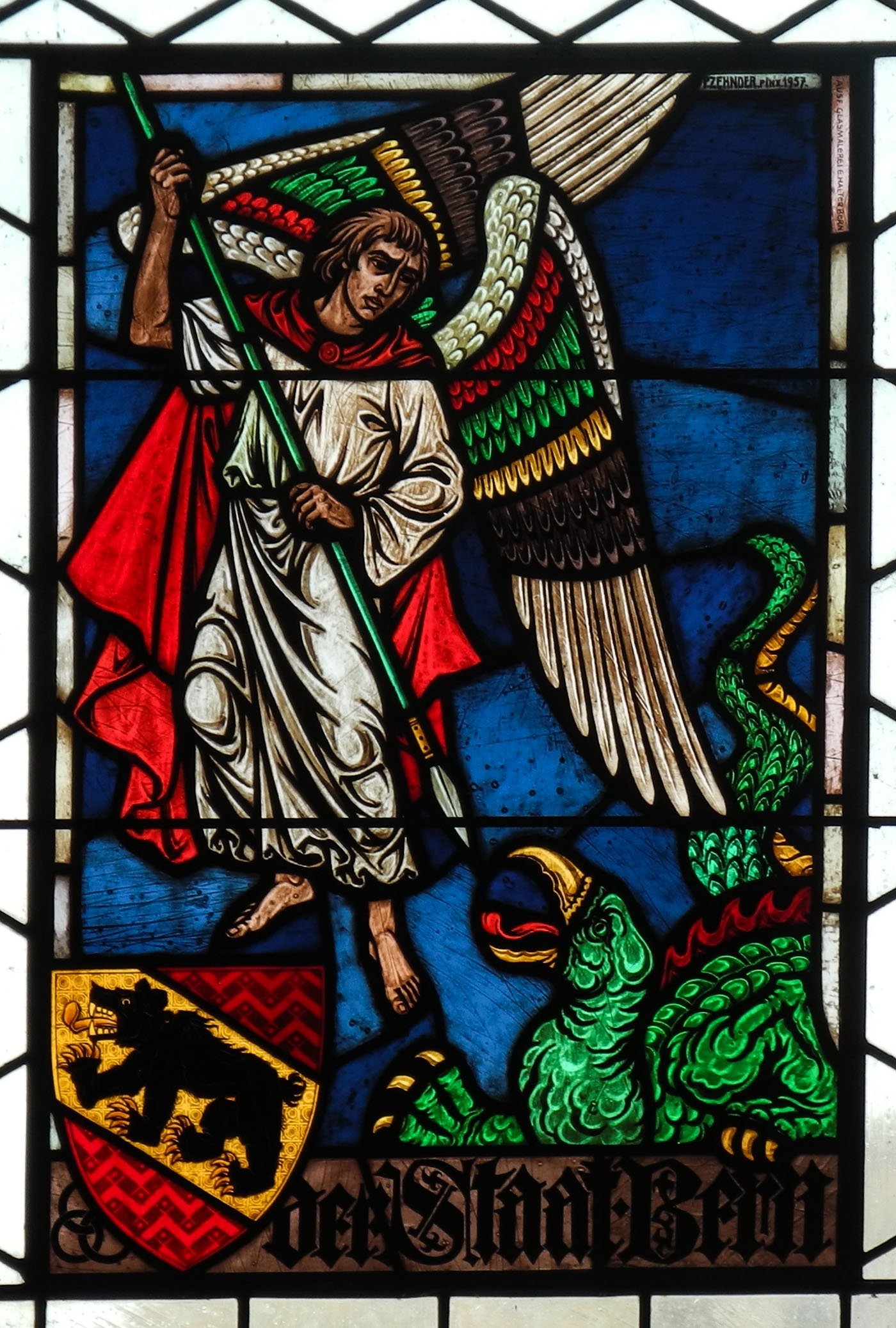
St. Michael the Archangel stained glass


We are all engaged in a battle.

We’re in spiritual combat right now and there is an Enemy. One of the most important strategies of warfare is to know your opponent. How well do you know yours? I don’t mean to scare you, but the Enemy certainly knows you. 

He goes by many names: Satan, the devil, the serpent, the dragon, the accuser, the evil one, Lucifer. But who is he? The devil is a fallen angel. Lucifer (meaning “light bearer”) was the highest of all the angels that God created. However, he abused his freedom, choosing to disobey God. His “Non serviam!” (“I will not serve!”) was the ultimate act of pride. Milton in his Paradise Lost has Satan sneer, “Better to reign in Hell than serve in Heaven.”

As a fallen angel, the devil has no natural body: he is pure intellect. Unlike our minds, which are always acquiring new information, angels know fully and completely. This is why the devil’s disobedience was a permanent choice with no possibility for repentance. 

The devil now roams about the earth, “looking for someone to devour” (1 Peter 5:8). He actively works to lead souls away from God. You’ve probably heard the saying that “the devil made me do it.” It’s a misleading notion, though. God has gifted us with free will and we’re responsible for our own decisions. The key, however, is that—when we are making those decisions—the devil is actively persuading us to choose the lesser good … in other words, to choose evil.

What can we do to protect ourselves from this Enemy? Here are six suggestions. 

Don’t make the devil bigger than he is.

Sometimes we look at the world around us, with its warfare, terrorism, discord, and violence and feel like the devil has won. Don’t be discouraged or lose hope—that is what the devil wants us to do! He is the “father of lies” (John 8:44). Despite how difficult things may be, the truth is that Christ defeated the devil! Satan is the loser and, through the grace of God, we are on the winning side. “Indeed the Son of God was revealed to destroy the works of the devil” (1 John 3:8).

Take the devil seriously.

Satan is not an obscure ideology or psychological condition, but a true, active, and powerful reality. As Pope Francis teaches about the devil, “He is evil, he’s not like mist. He’s not a diffuse thing, he is a person. I’m convinced that one must never converse with Satan—if you do that, you’ll be lost.” Pray the St. Michael prayer daily in your battle against evil.

Know Scripture.

Christ’s temptation in the desert shows us two things. First, Satan knows his Bible. He quotes Scripture and twists it, taking something good and trying to bring it to an evil end. Second, how does Christ combat the devil’s temptations? He quotes Scripture back to him! Scripture is a weapon in our arsenal against the Enemy. As Hebrews 4:12 says, “Indeed, the word of God is living and effective, sharper than any two-edged sword.”

Stay close to our Blessed Mother.

Mary is the Second Eve who, through her humility, crushed the proud head of the serpent. Satan fears Mary. Father Gabriele Amorth, the former chief exorcist of Rome, described an exchange he had with the devil, who said of Mary, “She makes me angry because she is the humblest of all creatures, and because I am the proudest; because she is the purest of all creatures, and I am not; because, of all creatures, she is the most obedient to God, and I am a rebel!” Our Mother—the most perfect of all mothers—will protect us, her children. Pope Francis reassures us, “Where the Madonna is at home, the devil does not enter; where there is the Mother, disturbance does not prevail, fear does not win.” Pray the rosary daily and make a Total Consecration to our Blessed Mother.

Guard yourself.

Don’t open your soul up to evil spirits. A ouija board, fortune telling, or seances might seem innocuous, but they’re actually a way for the devil to gain access to your soul. Playing a ouija board, by the way, is how the real-life possession behind The Exorcist film started. Possession, though rare, does indeed happen.


Have recourse to the sacraments (especially Holy Eucharist and Confession).

They will give us the supernatural grace to resist the devil’s temptations!


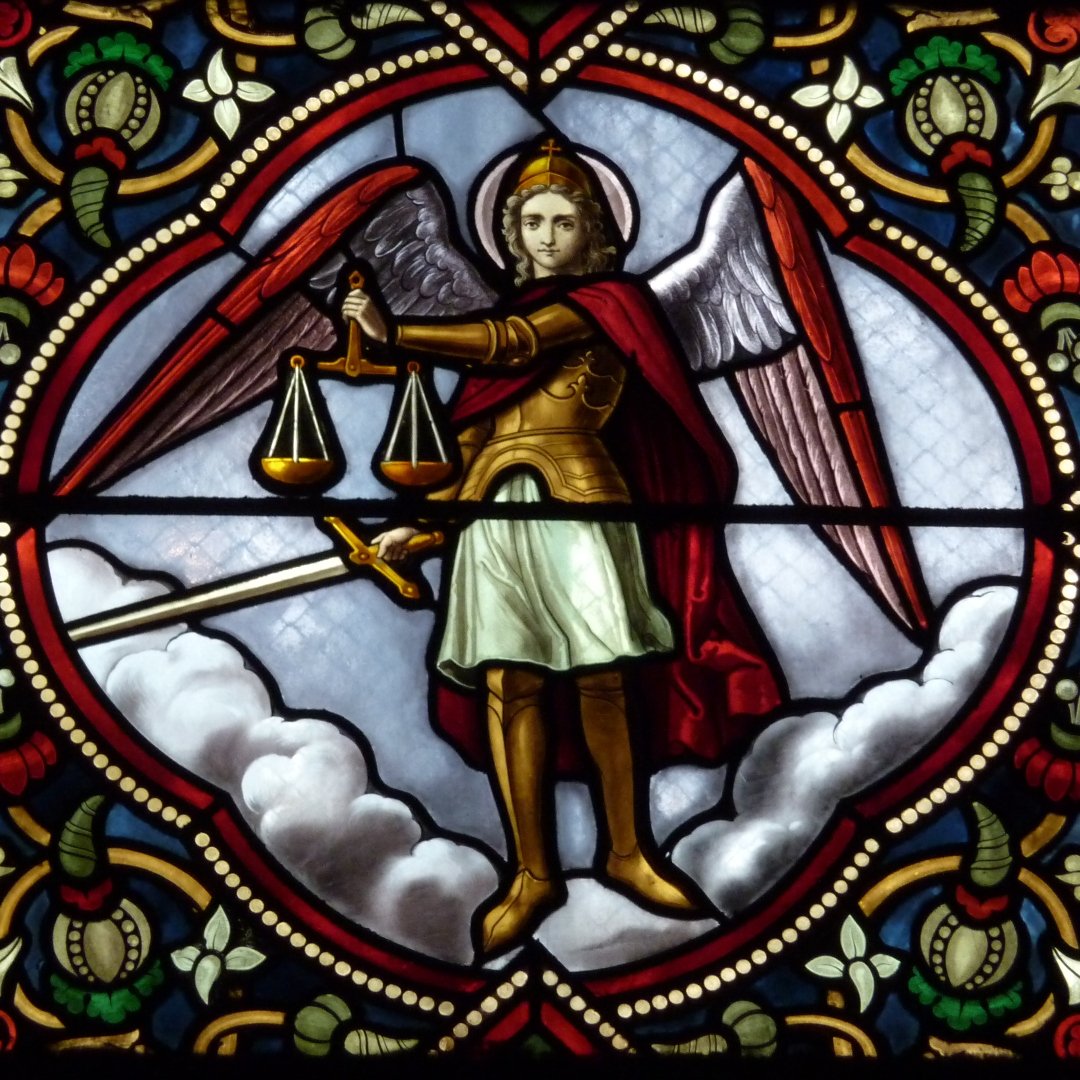
St. Michael the Archangel stained glass window


When Lent is over and Easter Sunday has arrived, we will once again renew our Baptismal promises, which begin with rejecting Satan, his works, and his empty promises. We need to know our enemy, but we need not fear. As St. Teresa of Avila reminds us in her Autobiography: 

If this Lord is powerful, as I see that He is, and if the devils are His slaves, … what evil can they do to me since I am a servant of this Lord and King? Why shouldn’t I have the fortitude to engage in combat with all of hell?


Sunday, March 6, 2022

Daily Gospel Reflection for March 6, 2022: 1st Sunday of Lent

 Today's Gospel: Luke 4:1-13

Every first Sunday of Lent we hear of Our Lord's temptation in the desert, close to the beginning of our own forty-day journey.

Jesus was led into the desert for an express purpose: "to be tempted by the devil." God permits temptation for a greater good. Temptation is a battleground where we can exercise virtue and rely more firmly on Him.

In the first temptation, the devil tells Jesus to turn a stone into bread—a temptation for power. However, Jesus reminds us that we were created for more than our bodily desires: We are body and soul. Is my heart focused on earthly goods, or do I remember that I am created for eternal happiness?

Then the devil, showing Jesus all the kingdoms of the world, proclaims,

"I shall give to you all this power and glory; for it has been handed over to me."

This world belongs to the devil. Am I in the world, but not of it?

Last, the devil dares Jesus to throw Himself off the temple in Jerusalem—a temptation to show His glory as the Son of God. The devil has the audacity to quote the Word of God to the Word Himself. The devil also knows Scripture . . . and recognizes the power of it.

Jesus counters the devil each time by quoting Scripture. It is likewise so important for us to commit the Word of God to memory, to treasure it in our heart, and to bring it to our defense when we are tempted.

The devil presents temptations dealing with kingdoms, power, and glory, but these do not ultimately belong to him. At Mass, we proclaim, “For Thine is the kingdom, the power, and the glory, now and forever.” May we glorify God in all that we do today!


Ponder:


How well do I know Scripture? Do I read the Word of God daily, committing it to memory, and reflecting on it in my heart?


Pray:


Lord, come to our defense when we face temptation. You have conquered the devil—strengthen us in our own spiritual battles and help us to glorify You in all of our thoughts, words, and actions today.

Monday, February 14, 2022

Helping Children to Love the Poor

Today we celebrate Valentine’s Day: a day typically focused on chocolates, cards, and romantic love. But love is not infatuation; it is, in fact, charity. So, on this Valentine’s Day, I ask: how do you love the poor? 

I’m afraid that, for much of my life, I didn’t love them very much. Of course, I’d pray for them, but I had little direct interaction with those living in poverty.


Kinds of Hunger

Then I began working in Youth Ministry and taking a group of teens to a nearby soup kitchen. There I observed a strange phenomenon. Those running the soup kitchen prepared the food in the kitchen and served each individual portion onto a tray. As the men and women came in, they took a seat at a table and someone brought them a tray. The organizers then remained in the kitchen, chatting among themselves while the guests remained in the other room, eating … mostly in silence. I felt a division between those who served and those being served and it unsettled me. 

One day, after bringing out a tray, instead of returning to the kitchen, I took a seat next to the older man at the table. He was probably in his seventies and I remember his old, grungy green coat. But even better I remember his smile as it lit up when I asked him his name and how his day was going. We chatted for the rest of the time. 

After that day, I told my teens that, after they had served the food, they should have a seat among the guests. We intermingled and conversed. Afterward, the teens and I gathered outside on the city sidewalk and shared our observations. Mike, a reflective look on his face, quietly commented, “They just wanted someone to listen to them.” 

Yes, there was hunger here: hunger for food, but also for a listening ear, a welcoming smile, and an honest concern.


soup kitchen servers


The Beggar on the Street

That all happened in my former life. Now I’m a mother. How do I, in this new role, love the poor? How can I help my children do the same? 

As we make our weekly drive to my parents’ house for a visit, we pass a beggar on the street. He holds a cardboard sign: “Homeless. Anything Helps. God bless you.” The air here in New York is frigid this time of year and he stands on his solitary, cold island among the lanes of traffic. 

My 5-year-old notices him and asks what he’s doing. I explain that the man has no home and is looking for someone to give him money. Without a moment’s hesitation, she tells me to stop and give him some.

In contrast, hesitation fills me. I’m a single woman driving a van full of children. Do I feel safe opening my window to this man? Don’t I warn my children about stranger danger? If I give this man money, how will I know that he won’t spend it on alcohol or cigarettes … or even worse? 

So I drive past the homeless man and I feel guilty. Is this loving the poor?

I didn’t feel comfortable giving money to the beggar on the street that day. But this doesn’t mean that there aren’t other means of loving the poor. Here are some of the ways we have found to help our children help those in need: 

  • We donate money monthly to a local food pantry. As we drove away from that homeless man on the street, I explained to my kids that we do give money to the poor, just in a different manner. 
  • We visit the food pantry to make physical donations. Our kids don’t see our online donations each month, but they do know the experience of picking food out of our family pantry, putting it into bags, and delivering it to the food pantry. They remember the woman’s face at the reception desk, full of gratitude for their donation of boxes of cereal and cans of soup. We try to make it tangible for our children. 
  • We encourage our children to put loose change into the poor box at church, so they make a contribution out of their funds as well. 
  • I didn’t feel comfortable handing money to the homeless man on the street, but I still wanted to give something. So one week my daughter and I put together a brown paper bag for him, filled with a sandwich, homemade cookie, and fruit. She also wrote a little note telling him we would pray for him. As we stopped at the exit, I rolled down my window and handed him the brown bag, much to his surprise and my daughter’s delight! 


20220214 CSpellman 2 (1)


  • We teach our children about the poor. Sometimes I might hear one of my children exclaim, “I’m starving!” I take that opportunity to gently explain that there really are people out there who are literally starving. We are not those people and we shouldn’t use phrases like that. When a child balks at eating something on his or her plate, I explain that there are boys and girls right now who literally have nothing to eat. We should be grateful for what we have and not waste our food, even if it’s not our favorite meal to eat. 
  • We find ways to make it personal. Our children are still relatively young and I don’t feel comfortable bringing them to serve at a soup kitchen yet. I do, however, desire them to have that personal connection, to make the intangible “poor” a very tangible name and face. We found that sponsoring children through Unbound has made this possible. Rajeswari in India and Cristopher in Honduras are extended members of our family: their pictures decorate our fridge door and we exchange online letters with them. Our kids learn about other kids living in poverty in other countries. We pray for each other and, in different ways, we help each other. 
  • We pray for the poor. As we drove away from the homeless man that day, I told our kids we might not be giving him money right now, but we could give him the gift of prayer. So, then and there, we lifted him up in prayer. Like that wise teen observed, the poor among us are hungry for more than the material. We shouldn’t provide for their earthly needs and ignore their spiritual ones. They hunger and thirst for God, too, even if they don’t know it or express it. We need to be the face of Christ to them, just as they are the face of Christ to us.


young girls packing bag at food pantry


When did we see Jesus hungry and give Him food?


I pray that when my family members (and yours too!) appear before God, Christ will be able to say to them,

“Amen, I say to you, whatever you did for one of these least brothers of mine, you did for me.” (Matthew 25:40)


Thursday, February 27, 2020

Know Your Enemy

A family had just moved into a new home, which they were renting, when they quickly noticed some strange things.  There were noises in the night.  Inexplicable shadows appeared on the wall, but there was no light to cast them.  The family became so disturbed that finally, one night, the father got everyone in the car and started to drive away.  They were only in the driveway when the father suddenly got a call on his cell phone.  It was from the house number though no one was in the house.  He picked it up and heard, “Come back here.

Sounds like something from a movie, but instead I heard this story (based on a real event) in a homily, given by a Catholic priest on the first Sunday of Lent.  Have you ever noticed that this Sunday’s Gospel (the First Sunday of Lent) is the same every single year? We always hear about Christ’s temptation in the desert as we begin the Lenten season.  And in that Gospel passage, we hear about the devil.

We are beginning our 40 days of prayer, fasting, and almsgiving.  We will inevitably face temptation during this time: maybe to abandon our good resolutions, to compromise, or to feel defeated and discouraged if we stumble.  Sometimes we yield to temptation out of laziness, love of pleasure, comfort-seeking, and other vices. But sometimes the temptation to deviate from our good Lenten resolutions comes from a source outside of ourselves.

Whether we are always aware of it or not, we are all engaged in a battle.  We are in spiritual combat right now and there is an Enemy. One of the most important strategies of warfare is to know your opponent.  How well do you know yours? I don’t mean to scare you, but the Enemy certainly knows you.

He goes by many names: Satan, the devil, the serpent, the dragon, the accuser, the evil one, Lucifer.  But who is he? The devil is a fallen angel. Lucifer (meaning “light bearer”) was the highest of all the angels that God created.  However, he abused his freedom, choosing to disobey God. His “Non serviam!” (“I will not serve!) was the ultimate act of pride.  Milton in his Paradise Lost has Satan sneer, “Better to reign in Hell than serve in Heaven.”

After his rebellion, Satan was cast out of heaven.  This was the first act of evil: evil was a historical event.  As we read in the book of Revelation 12:7-9:

“Then war broke out in heaven; Michael and his angels battled against the dragon. The dragon and its angels fought back, but they did not prevail and there was no longer any place for them in heaven. The huge dragon, the ancient serpent, who is called the Devil and Satan, who deceived the whole world, was thrown down to earth, and its angels were thrown down with it.”
As an angel, the devil has no natural body.  He is pure intellect. Unlike our minds, which are always acquiring new information and making connections, angels know fully and completely.  This is why, when the devil disobeyed God, it was a permanent choice with no possibility for repentance. Saint Thomas Aquinas writes, “Hence it is commonly said that while a man’s free will is able to alternate between contraries both and after a choice, an angel’s is able to so alternate only before choice.”  When an angel wills something, it does so entirely with full knowledge of its decision and so the devil will always be evil.
The devil now roams about the earth, “looking for someone to devour” (1 Peter 5:8).  He actively works to lead souls away from God. That is what he did with Adam and Eve.  You’ve probably heard the saying that “the devil made me do it.” It’s a misleading notion, though.  God has gifted us with free will. We are responsible for our own decisions. The key, however, is that—when we are making those decisions—the devil is actively persuading us to choose the lesser good … in other words, to choose evil.  This is the devil’s whole agenda.
What can we do to protect ourselves from this Enemy?  Here are some suggestions.
  1. Don’t make the devil bigger than he is. Yes, Satan is powerful and active.  Sometimes we can look at the world around us, with its warfare, terrorism, discord, and violence and feel like the devil has won.  Don’t be discouraged or lose hope—that is what the devil wants us to do! He is the “father of lies” (John 8:44). Despite how difficult things may be, the truth is that Satan is defeated.  Christ conquered Him through the Cross! Satan is the loser and, through the grace of God, we are on the winning side. “Indeed the Son of God was revealed to destroy the works of the devil” (1 John 3:8).
  1. Take the devil seriously. There are some who simply deny that the devil exists.  I had a professor, for example, who bluntly told me there is no Satan.  Some theologians assert that the language discussing Satan is simply myth or fictitious.  Christ, however, took the devil seriously and so should we. Satan is not an obscure ideology or psychological condition, but a true, active, and powerful reality.  Scripture and Church Tradition both confirm this. As Pope Francis teaches about the devil, “He is evil, he’s not like mist. He’s not a diffuse thing, he is a person.  I’m convinced that one must never converse with Satan—if you do that, you’ll be lost.” Pray the St. Michael prayer daily in your battle against evil.
  1. Know Scripture. This Sunday’s Gospel of the temptation in the desert shows us two things.  First, Satan knows his Bible. He has the audacity to tempt Christ (the Word of God made flesh) with the Word of God in Scripture.  Satan quotes Scripture and twists it, taking something good and trying to bring it to an evil end. (This is why, by the way, we are so blessed as Catholics to have the Church to guide us in our interpretation of Scripture, lest we be led astray by false ideas.)  Second, how does Christ combat the devil’s temptations? He quotes Scripture back to him! Scripture is a weapon in our arsenal against the Enemy. As Hebrews 4:12 says, “Indeed, the word of God is living and effective, sharper than any two-edged sword.”
  1. Stay close to our Blessed Mother. She is the Second Eve who, through her humility, crushed the proud head of the serpent.  Satan fears Mary.  Father Gabriele Amorth, the former chief exorcist of Rome, described an exchange he had with the devil, who said of Mary, “She makes me angry because she is the humblest of all creatures, and because I am the proudest; because she is the purest of all creatures, and I am not; because, of all creatures, she is the most obedient to God, and I am a rebel!” Our Mother—the most perfect of all mothers— will protect us, as any good mother will do with her children.  Pope Francis reassures us, “Where the Madonna is at home, the devil does not enter; where there is the Mother, disturbance does not prevail, fear does not win.”  Pray the rosary daily and make a Total Consecration to our Blessed Mother.
  1. Guard yourself. Don’t open your soul up to evil spirits.  A ouija board, fortune telling, or seances might seem innocuous, but they are actually a way for the devil to gain access to your soul.  Playing a ouija board, by the way, is how the real life possession behind The Exorcist started.  Possession, though rare, does indeed happen. 
  1. Have recourse to the sacraments (especially Holy Eucharist and Confession).  They will give us the supernatural grace to resist the devil’s temptations!
Our Lord is with us as we begin this Lent.  He has fought the battle and won! He will help us in our fight, too.  When Lent is over and Easter Sunday has arrived, we will once again renew our Baptismal promises, which begin with rejecting Satan, his works, and his empty promises.   We need to know our enemy, but we need not fear. As St. Teresa of Avila reminds us in her Autobiography
“If this Lord is powerful, as I see that He is and if the devils are His slaves … what evil can they do to me since I am a servant of this Lord and King?  Why shouldn’t I have the fortitude to engage in combat with all of hell?”

Tuesday, April 2, 2019

Make the Castle of Your Heart Stronger

As parents, we like to give good things to our kids.  We make sacrifices for them and try to give them the best—from buying organic food to driving hours so your child can attend a sports competition.

When I was a child, I loved receiving gifts.  What little boy or girl doesn't?  But now, as an adult, the thing that brings me greater happiness is seeing my children receive a gift.

Our oldest daughter, Mary, received a tremendous gift a few weeks ago: she made her First Reconciliation.

I have been to the sacrament of Reconciliation (or Confession) so many times in my life.  I always appreciate that feeling of relief, gratitude, and spiritual healing when I leave the confessional.  I suppose, however, that familiarity softened the power of the sacrament for me ... I had sadly become accustomed to it.  I began to take it for granted that this gift of mercy had been purchased by the price of Christ's blood on the cross.

As Mary bounded up the stairs into the confessional room (she was very excited to be making this sacrament), I knelt and stared at the tabernacle.  All I could think was: Lord, you died for her.  You suffered excruciating pains, You endured such agonies—for my daughter, my precious child I love so much.  Even if she were the only person in the world, You would have done all of that for her.  You have given her the greatest gift of all: the opportunity to be home with You forever in heaven.  And, Lord, You did it because You love her even more than I.

Immense gratitude flooded my heart.  My husband and I might try our best to give our kids a good education, to instill strong morals and virtues, to provide them with a happy and holy home.  But we could never give them this: we could never forgive their sins.  

That being said, we can foster in their hearts a love of this beautiful sacrament, this opportunity to meet Christ and to receive His forgiveness.  We can help them love the gift ... and its Giver.

So here are some of the ways we try to do that in our family.  Maybe some of them will be helpful for you, too.


  • Practice saying, "I'm sorry" and, "I forgive you" among each other.  If our two-year-old pushes her brother, we ask her to say, "I'm sorry."  Also important is her brother's, "I forgive you."  If I commit a wrong toward one of our children, I try to remember to ask his or her forgiveness—we parents aren't perfect and it's good for our children to see we have the humility to admit we our sometimes wrong, too.
  • Lead by example: go to Confession regularly yourself.  If you tell your children that Confession is important, but don't avail yourself of the sacrament, they won't believe you.  Let your actions show its importance.  
  • Read about Confession and discuss it together.  Mary and I have read A Little Book about Confession for Children by Kendra Tierney together to help prepare her for the sacrament.  We both learned so much from that book—I can't recommend it highly enough.  It's very gentle in its approach and addresses some concerns  and fears children (and parents) might have about Confession.  The questions and answers are thorough and engaging.  Read it as a family!
  • Prepare for Confession every day by making a daily Examination of Conscience.  Mary and I do this together at bedtime each night.  We keep it very simple.  First, we each silently think of one good thing we did that day.  Then we think of a sin we committed.  Third, we make a resolution about what we could do better the next day.  Finally, we pray the Act of Contrition.  Doing this each night helps with the daily battle against temptation.  It can keep our sins in check and helps us hold ourselves responsible.  Also, when we prepare for Confession, we can think back to these nightly Examinations of Conscience and remember the sins we committed.

Ultimately, my husband and I emphasized to Mary that Confession is about meeting her best friend, Jesus, and apologizing to Him for the times she hurt Him through her sins.  

St. Teresa of Avila described the soul as a castle where the King, our Lord, dwells.  Through Confession, Mary is getting her soul ready, cleaning it and making it beautiful to receive Jesus in her First Holy Communion.  As we left the church and headed home, Mary remarked to me, "Confession is where you can take your castle heart and make it stronger so the devil can't get in."  All of our castles could use some fortifying.


It's springtime.  Does your soul need some spring cleaning, too?  Let your children ... and yourself ... receive the incredible gift of Confession.

Tuesday, March 5, 2019

The Broad View

“To thy own self be true.”
It’s a lovely saying, isn’t it?  But sometimes I struggle with living it because I think, in many ways, I really don’t know myself all that well.
I would venture to assert that I’m not alone in this predicament.
Self-knowledge is extremely difficult to acquire.  Yet, how very simple it is for us to know (and in knowing, judge and criticize) those around us.  It’s astonishingly easy to critique and condemn my neighbor while simultaneously remaining ignorant about my own vices and shortcomings.
If I were to ask you, “What is your greatest fault?” could you answer?  Do you really know yourself?  Self-knowledge is so key because, well, if you don’t know what’s wrong…how can you fix it?
The thing is that, no matter how long we stare in the mirror, sometimes it’s just so hard to have an objective view of ourselves.
Sometimes we need to enlist the help of those closest to us.  I thought I knew my greatest fault, but it wasn’t until an incredibly revealing conversation with my husband a couple of weeks ago that my eyes were opened to something I never saw before.  He identified something I really struggle with, but that, until said conversation, I had been more or less blind to.
The reason I bring this up is because it’s a timely topic.  Tomorrow is Ash Wednesday and thus starts the holy season of Lent.  It’s traditionally a time of prayer, fasting, and almsgiving.  The word Lent means “spring.”  So you can think of it as the passage of your soul from the dead of winter’s sin to the new life of springtime grace and virtue.
For that spring cleaning in your soul to occur, you need to remove the dirt and grime of sin.  You need to really do some soul searching and ask yourself: What is my greatest fault?  What do I need to clean up?
Really step back and take the broad view.  Perhaps you fall into the same pattern that I do: you become so engrossed in the most immediate tasks and problems at hand, you don’t really pause and step back to reflect, to ask the deeper questions, to review, observe, and imagine.
This Lent, I challenge you shift your perspective.  Reflect on your life–past, present, future.  Then ask yourself: What do I see as my greatest fault, the vice that most often is the obstacle in my way of being the person I should be?  Test your answer by asking someone who knows you best; his or her response may cause you to revisit the question.  And then work at your fault–it may mean stopping a particular habit, or perhaps pursuing a positive habit in its place.
My challenge this Lent?  Moral courage.  I’m not talking about letting my faith show–I’ll whip out a rosary in any public place without a second’s thought.  I’m talking about having the moral courage to speak the truth, especially when such truth will be met with opposition.  I’m going to strive not to be a “people pleaser.”  Obviously charity must always guide our actions, but sometimes charity demands confronting someone who is hurting him or herself through sin.
There is a memory that is so clear in my mind.  I was on bus #76, riding along Spring Avenue on our way to high school.  My sophomore self was sitting next to sixteen-year-old Leah, a real talker who loved music, her boyfriend, and life in general.  Leah had a developmental disability.  In front of us sat two boys, who sadly fall under the stereotypical category of “bully.”  For that whole ride they bullied Leah, tormenting her with crass jokes, disrespectful names, and taunts and teases.
And I sat there, burning inside that they could be so cruel and hurtful.  But it was like I was paralyzed.  I said nothing.  Why?  I was scared.
It’s a scene that’s been replayed throughout my life–different people, different scenarios, but the same idea: I was met with a challenge and, through fear of what someone might think or concern I would offend or bother someone, I was silent when the truth needed to be declared.
So, courage.  That’s my Lenten goal.
By the way, since we are on the topic, let me also share something else I do every Lent.  It’s a favorite tradition of mine, one I was inspired to start more than ten years ago.  Each Lent I cut out 40 pieces of paper and write on each one the name of someone important in my life: mostly family and friends, but I include my “enemies,” too, since we are also supposed to pray for them.  Then every morning I draw out a name and pray for that person throughout my day, remembering him or her in my prayers and offering up any sufferings for him or her.  It’s very beautiful, plus it’s exciting to see how grace works.  Frequently I have found myself praying for someone the very day he or she needed extra prayers.  God works in pretty neat ways sometimes.


I pray that this Lent will be a springtime of spiritual renewal for you.  The beautiful thing is that, when we shift our perspective and take the broad view, suddenly our lives are filled with the new light of understanding and clarity.
Do some reflecting tonight.  And tomorrow, begin Lent by tackling that which most needs work in your soul.