Friday, June 3, 2022

Lessons from I Am Margaret

 Do I believe this enough to die for it?


In the future world of I Am Margaret by Corinna Turner, every citizen is Sorted at the age of eighteen. All young men and women must take a series of standardized tests. Those who pass are labeled New Adults; those who do not achieve a high enough score are “reAssigned.”


Margaret Verrall’s fate seems sealed: with numeric dyslexia, she can’t expect to score high enough on the math exam, despite her excellent results in the other subjects. As suspected, Margo is sent as a reAssignee to the Facility where she will spend the rest of her days exercising and getting her body into peak form. After that, those in charge will march her into the Lab where she will be dismantled, her organs harvested for use for someone more worthy of them. This world of the future takes our current society’s disrespect for life and carries it to its natural end.


​​To know there is nothing more to it. That a dead body is made up of only two things—useful parts and useless parts. That the human race is made up of the same—useful people and useless people.


Margo summons her Catholic faith to comfort and sustain her. She and her family belong to the Underground, the secret community of believers; in this dystopian world, Christianity and religious practice are forbidden, since their moral tenets obviously oppose the culture of death around them. Margo prays her rosary and her fiance, Bane, even manages to catapult a consecrated Host over the Facility’s wall so she can receive Holy Communion on Easter Sunday (a nice gesture, but troubling as it seems disrespectful to handle the Eucharist in that way).


Still, after being forced to watch a family friend, Father Peter, undergo the cruelest punishment of all (Conscious Dismantlement), Margo struggles with one of her daily prayers. She has a hard time telling God that she will accept death, in whatever form He Wills it.


O Lord, I now, at this moment, accept whatever kind of death it may please You to send me, with all its pains and sorrows.


This is Margo’s internal conflict throughout the novel while the outer conflict involves forming a plan to escape the Facility. Escape becomes especially critical when Margo secretly enters the government’s annual contest: this year, a creative writing challenge. Margo sees this as an opportunity to tell the truth of her story, to help the people of her world understand that she has value and worth beyond her physical organs. 


And this is the simple truth. I am Margaret. I am just like you. If I were not, you would not be going to kill me.


But when she wins the contest and the truth is in print, her life hangs in the balance. Can her fiance help her and the others escape before Margo faces Dismantlement herself? And if she finds herself strapped down to a bed, the Doctor at hand to cut her open and remove her organs, does she have the moral courage to stay true to her faith or will she deny her beliefs in order to preserve her earthly life?


I Am Margaret is a heart-pounding read, especially the final third of the book, which I found particularly gripping and suspenseful. I admired Margo’s fortitude, selflessness, and leadership. I also appreciate how Turner aptly and poignantly incorporates other-abled characters, especially Jonathan, a blind young man, and Sarah, who has a mental disability. Turner does a good job pacing the narrative, too, placing dramatic events right where they are needed to jolt the reader’s sense of security.


That said, I found aspects of the book disagreeable—both on a pragmatic as well as moral level. The book would have profited from professional editing because the grammatical and punctuation errors distracted from the story (strange sentence structures, incorrect use of semicolons and commas, words missing, fragments functioning as sentences). I also felt annoyed by the overuse of character names (when you are having a conversation with someone, you don’t usually use their name to their face repeatedly) and the abundant italicizations. 


On a more serious note, parts of the plot puzzled me. Why would the government not actually read Margo’s book before it went to publication? Additionally, Margo’s fiance is not Catholic; he doesn’t belong to any religion actually and even aggressively tried to persuade Margo not to be Confirmed. Here is just one exchange between the two:


“You know, sometimes I get very jealous of those bits of crisp bread,” Bane would say, if I lamented too strenuously the missing of a Sunday Mass due to lack of priest. “It’s not bread, Bane, it’s Our Lord, you know that.” 


Yet, Margo never addresses this throughout the novel. Wouldn’t she express concern about the salvation of his soul? Or wouldn’t this create more conflict between the two?


The narrative bordered on gory at parts—perhaps it has too vivid imagery and description for some more sensitive readers. Other times the writing was downright crass. Consider this sentence just as one example:


And to give the fear the finger, I decided I would say the Act of Acceptance.


To me, this reads like a kind of desecration. How can a person pray while simultaneously profaning?


Also troubling are the many times that Margo places herself in situations of near occasion of sin. Jonathan, the blind boy, is moved to the girl’s room since the boys are too violent (which seems to be another plot hole—why are all the boys like this?). In order to disguise the fact that he is Catholic (and thus, avoid explaining why he won’t fornicate with any of the girls), Jonathan and Margo share the same bed at night. Although nothing seriously wrong happens between them, things are not entirely chaste either and the farce becomes more than just pretend as attraction between them escalates.


My body felt oddly hot as his bulk hovered over me in the dark. “I would have you safe…” he murmured, and his fingers moved to caress my tingling lips…


Margo’s thoughts are not chaste either:


What’d it said in that latest EuroGov pamphlet on spotting dangerous Underground members? ‘A freakish disinterest in sexual intercourse’? Hah, in their dreams! If I got out of here, Bane and a bed were pretty high on my list of priorities. Via a priest, of course. 


When my children are teenagers, this is not the kind of thing I would like them to read.


So, while I appreciated and enjoyed the premise of I Am Margaret, I found serious problems with several aspects of the writing and the plot. 


I’m grateful for the opportunity to reflect on martyrdom. I’ve often wondered if I would have the fortitude to stand firm in my faith, even if doing so meant a gruesome death. I find comfort in Our Lord’s words that the Holy Spirit will come to our aid in such an instance. 


I’ve also thought about the kinds of martyrdom. Not many of us are called to capital “M” Martyrdom: the actual sacrificing of our life for the faith. Yet all of us are called to lower case “m” martyrdom: the daily witness of denying ourselves, resisting temptation, and choosing the right (often harder) path … the picking up of our cross. The truth is that we should die to self every day, in all the small inconveniences, pinpricks, and annoyances. It’s this little martyrdom that trains the soul for the greatest Martyrdom to which any of us might be called. 


Monday, May 23, 2022

Lessons from White as Silence, Red as Song

 In White as Silence, Red as Song by Alessandro D’Avenia, Leo sees his world in color. Every emotion is a color in the mind of this sixteen year old boy. Red is passion and life. Red is the color of Beatrice’s hair, the girl in his grade with whom he’s desperately in love—though he hasn’t summoned the courage to speak with her just yet. Blue is the sea, the calming eyes of Silvia: his best friend and confidant. But worst of all is white: nothingness, silence, solitude. 


As the book begins, Leo seems like a normal teenage guy. He blasts his music, dares his soccer buddy, and races his scooter. His life is busy, fast, and noisy. Then a substitute teacher comes in—a “loser to nth degree,” according to Leo. Leo nicknames the substitute “the Dreamer,” for indeed, that is what the mentor challenges the young people to do:


 “Only when people have faith in what is beyond their reach—a dream—does humanity take steps forward that help it to believe in itself.”


Leo already has his dream: Beatrice. Dreams are red because they are “the blood of life.”


… you know that those things pass. But love doesn’t. Your red star always shines. Beatrice is there, love is in your heart, and it is amazing. It makes you dream, and nobody can take the dream from you because it is somewhere nobody can reach. I don’t know how to describe it: I hope it never goes away.


But Leo’s dream crumbles to pieces when Beatrice doesn’t show up for school for a few days and Leo learns the terrible news that Beatrice has leukemia. Leo’s life suddenly crashes, both literally and figuratively. Racing through life unaware of what the events around him really mean, Leo needs to put on the brakes … but his scooter’s brakes are broken so he crashes and lands in the hospital, immobile with his arm in a cast.


As Beatrice’s health declines, Leo sees his dream evaporating before his eyes. He struggles to understand Beatrice’s suffering and how God can allow it. But dreams almost always involve obstacles and often manifest and develop in ways we don’t expect at first.


White as Silence, Red as Song is a departure from my usual book of choice and at first, it took some adjusting for me to be in the mind of a high school boy. The short chapters are a running train of thought from Leo, varying from the sometimes menial (and humorous) details like taking Terminator—his oversized dachshund with an incontinent bladder—out for a walk to much deeper, philosophical reflections. 


I’ve never been a high school boy, so I can’t verify if this is indeed true, but I did question some aspects of the plot. Do teenage boys really fall in love with someone with whom they’ve had no previous communication? Are they also so unperceptive that they can’t read the obvious clues that their female bestie harbors romantic feelings for them?


Other parts of the plot felt dead-on accurate. Leo’s first recourse when he has a question is to look it up on Wikipedia. (I can empathize, as I’m prone to do this myself!) His insecurity as an adolescent rings so true as well: “I feel so ugly I just want to hide in my room, never looking at myself in the mirror. White.” Yet, at other points, Leo feels like a lion, ready to take on anything. Such are the dramatic highs and lows of the teenage years.


My favorite aspect of the book is the symbolism of the colors, particularly when they take on a theological tone. Leo despises white, a sentiment that becomes stronger when he learns that white blood cells are killing Beatrice. So he donates his blood to help her. The priest who teaches at his school then explains that blood cures people, just as Christ cured people from sin by shedding His blood on the cross. The crucifix is “a letter written to mankind, signed with the blood of God, who saves us all with that blood.” What a powerful and moving imagery, juxtaposing the healing nature of Leo’s donated blood—freely given out of love—and the blood of Christ shed for us on the cross.


I also reflected while reading this book about the importance of a good education in the life of a teen. Leo attends a classical high school, which he complains about due to the rigorous nature of his classes and needing to learn Latin and ancient Greek. Regarding his school, Leo writes that it “breaks your balls from dawn till dusk.”


Yet, it’s through ancient Greek he learns the words leukos (white) and aima (blood), thus forming the word leukemia. Piercing through the noise of video games and rock music is the elevating influence of the books and history Leo learns at school: Dante’s The New Life and the siege of Rome, for example. You can see these ideas and thoughts infiltrating his own thoughts: Leo makes connections between his life experiences and what he is learning in school. 


As Leo struggles trying to understand what is happening to Beatrice, the staff at his school provides counsel and wisdom. The Dreamer, who began as a “loser” substitute teacher, becomes someone Leo can confide in and become vulnerable with, crying about his broken dream and heartache for Beatrice. Meanwhile, the priest at the school challenges Leo to rethink his perception. In a powerful exchange, Leo asks the priest how someone can love God when no one can even touch Him. The priest replies that we touch Christ’s body in the Eucharist, to which Leo counters that the Eucharist is just symbolic. “You think I’ve put my life at stake for a symbol?” the priest counters. 


The people at this classical school become critical presences in Leo’s life, discipling him alongside his parents in helping him understand, process, and influence his world for good. They form his mind and prompt him to question some of his assumptions. I had to wonder to myself: what if Leo didn’t attend this school? What if he didn’t have the presence of the Dreamer or the priest in his life? What if he attended a school that taught the Common Core? Would his character arc have differed? 


One of the biggest factors for parents when looking to buy a home is the available schools nearby … and for good reason. A child’s education is one of the strongest influences in his or her life. Our family relocated for the purposes of schooling: we wanted our children to attend a classical school. The more I understand classical education, the more I esteem and appreciate it. A Christian classical education seeks to form disciples, to imbue wisdom, to treasure what is true, good, and beautiful. It is not just about passing certain standards in order to get into a prestigious college, though classical education does hold the students to a high level of excellence; that excellence, however, is for God. 


I wish all teenagers were as blessed as Leo to find themselves surrounded by such holy, enriching mentors, of past and present. In a world of so much noise, we all need guidance and support to remain still in the silence of white: white space that we can fill with dreams that run red as blood. 


Lessons from The Ministry of Fear

“I’m wanted for a murder I didn’t do. People want to kill me because I know too much. I’m hiding underground, and up above the Germans are methodically smashing London to bits all round me.”


What’s one murder when there is a daily massacre of innocent civilians?


That’s the atmospheric setting of Graham Greene’s The Ministry of Fear. Written in 1943, the book takes place during the Blitz of 1941, when Germans nightly bombed London. London is falling apart: attacked, living in fear of the enemy, and falling into ruins. It mirrors Greene’s protagonist, Arthur Rowe.


The results of a 9/9/1940 air raid on London

The first section of the book is called “The Unhappy Man” because Rowe has committed murder: he killed his wife. However, the court released him after a stay in a mental institution since the act was deemed a “mercy” killing. Rowe’s wife suffered from a terminal illness and, unable to watch her in pain any longer, he killed her out of pity.


Rowe is haunted by memories and weighed down by guilt. He never questioned his wife as to whether she desired to curtail her suffering by an early, premeditated death. Instead he poisoned her silently and then left her to die alone, knowing that staying by her bedside and breaking their usual routine would arouse her suspicion. He wonders whether he acted out of selfishness: he couldn’t bear watching her anymore and so killed her. This raises one of the themes Greene would explore in his later novel The Heart of the Matter. How do love and pity differ? Love would have suffered alongside his wife; pity murdered her.


“The law had taken a merciful view: himself he took the merciless one. Perhaps if they had hanged him he would have found excuses for himself between the trap-door and the bottom of the drop, but they had given him a lifetime to analyse his motives in.”


Then one day fate reaches him in the form of a fête—a fun play on words. With the help of a fortune teller, Rowe supplies the correct weight of the prize cake. (A cake, the reader later learns, that contains secret films with information regarding Britain’s war-preparedness.) As Rowe exits with the cake in hand, the charity organizers attempt to stop him, explaining that they made a mistake and the cake belonged to someone else. Rowe sidesteps their protests and brings the cake home.


The next day, a stranger appears on his doorstep, wanting to have tea with him. The man offers to buy the cake from Rowe, but then a bomb from the nightly raid drops on the building, leaving the stranger unconscious—but not before Rowe realizes that the man has put poison in his tea … Rowe recognizes the smell, since he himself had used the same poison to kill his wife.


This sets Rowe on a path to learn why someone is out to get him. At the charity that sponsored the fête he meets brother and sister Willi and Anna Hilfe (Hilfe is German for aid or help). They promise to help him. Willi accompanies Rowe to the home of the fortune teller and they sit down to a seance she is hosting. Anna telephones, warning Rowe to leave, but he stays—convention making it too uncomfortable for him to cause a scene. 


“Conventions were far more rooted than morality; he had himself found that it was easier to allow oneself to be murdered than to break up a social gathering.”


The lights go out and, when they turn back on, the man next to Rowe is dead … killed by Rowe’s knife.


Now wanted by the police for a murder he didn’t commit, Rowe goes into hiding. He doesn’t know who to trust or who wants him … or why they want him. The Ministry of Fear has him in their grip. During the war, the Nazis would target individuals in countries they sought to control, blackmailing them and trying to force compliance with their plans. 


“They formed, you know, a kind of Ministry of Fear—with the most efficient under-secretaries. It isn’t only that they get a hold on certain people. It’s the general atmosphere they spread, so that you can’t depend on a soul.’”


A tube station functioning as a bomb shelter in 1940

Things become complicated when Rowe loses his memory in another bombing. He becomes a happy man, known by the name of Rigby. He is no longer depressed by memories, and lives comfortably in a recovery center—run, unbeknownst to him, by the enemy. 


This raises the question of memory. Is it a curse or a blessing? As Rigby, Arthur is content. Yet, what is peace in ignorance? 


“‘I don’t remember. There are years and years of my life I still can’t remember.’ ‘We forget very easily,’ Mr Prentice said, ‘what gives us pain.’”


Such false peace comes at a great cost. Without his memories, Arthur is an unknowing victim and the enemies can continue their work without any hindrance. Perhaps this is why Greene titles the final section: “The Whole Man.” Happiness is not the same as wholeness.


Greene called The Ministry of Fear one of his “entertainments,” and it is indeed an entertaining story. The undisclosed identity of the “bad guys” keeps the plot suspenseful while the setting of the Blitz heightens the danger and drama. I wasn’t fond of some of the coincidental plot-points (could Rowe be that gullible to fall into an obvious trap of the enemy?) and the romantic subplot likewise felt implausible. Yet, I enjoyed the deeper themes, along with Greene’s at times questionable, always disturbing and haunting morality. Consider this line, which reflects some seriously askew theology:


“But for the sake of people you loved, and in the company of people you loved, it was right to risk damnation.”


In the end, Rowe gets the girl, but I don’t know if it can rightly be called a “happy ending.” Greene has a twist that leaves the reader wondering whether his protagonist has really changed that much after all. Will pity kill Rowe’s new love just like it had murdered his first? Pity is not a virtue, but a vice, and it will bind and imprison Rowe more than any Ministry of Fear because so often it is what happens in the interior of our soul that destroys us more than any exterior enemy.


Monday, May 9, 2022

Hope in a Dystopian World

 “I feel like I’m living in a dystopian novel,” I said to my husband one day in March 2020. 

That was when my world, like yours, came to a dramatic halt. A universal shut-down, imposed due to the coronavirus pandemic, became an unprecedented experience for our generation. Practically everything was closed: offices, schools, shops, even churches. 

Our reality became so very unreal and—perhaps just as worse—no one could tell where this would lead, how long the shut-downs would last, and how many would die. It all felt surreal, eerie, even apocalyptic. 

A couple of months ago, life for the people in Ukraine abruptly changed. Perhaps they now feel as though they live in a dystopian world: their country invaded, lives uprooted and—in some cases—lost, their normalcy and feeling of safety destroyed. 

Life can change without a moment’s notice. Which one of us had any practice living in a dystopian society? Is there a kind of training ground for preparing oneself to cope with difficult situations, whether they be a pandemic, warfare, persecution, corrupt government, or all of the above? 

Well, yes, I would argue that we do have a training ground available to us … and it’s in the pages of a novel.


Reading as Formative 

Of course, many of us read for the sheer pleasure of immersing oneself in some other fictitious world. Reading can become an escape, a diversion from the pains and problems of the present. Simultaneously though, one of the benefits of literature is to enable the reader to experience situations he or she may not have experienced before and, thereby, practice the appropriate virtues and avoid the relevant vices in these circumstances. 

As Atticus in To Kill a Mockingbird said, “You never really know a man until you stand in his shoes and walk around in them.” Well, reading a novel is stepping into another person’s shoes, experiencing that character’s trials and triumphs, listening to his or her thoughts and desires. In doing so, we may find inspiration: consider persevering Frodo who carried the burden of the evil ring into the very depths of darkness. On the other hand, we may find a warning, such as the demise of Anna Karenina through her adulterous affair. 

Good literature becomes a point of inspiration that we can take back to our everyday reality. We enter the world of the novel, but then those ideas, thoughts, plots, and feelings find their way into our own lives.


null


Christian Dystopian Fiction 

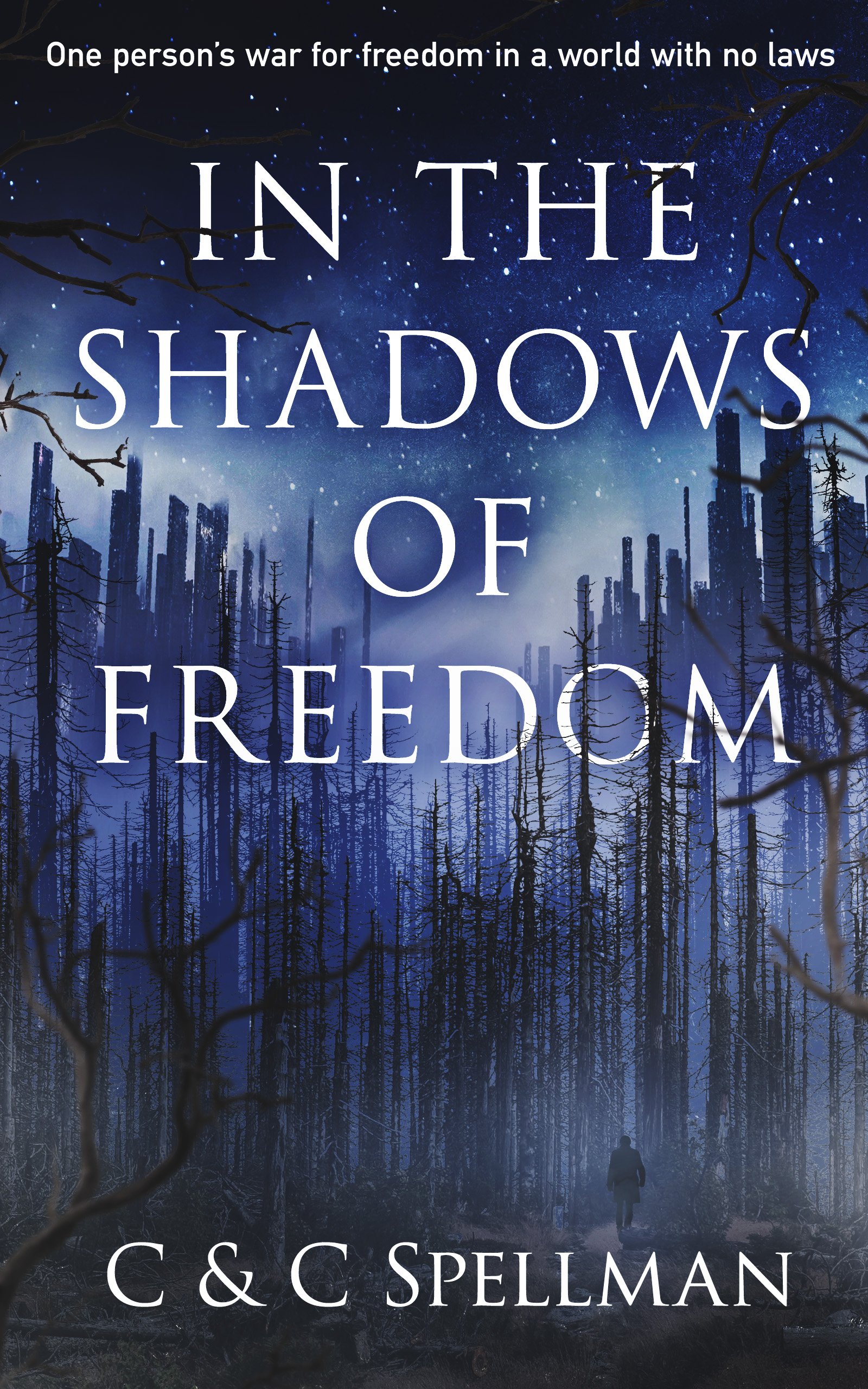
In the midst of the coronavirus restrictions and shut-downs, my husband and I published our debut novel: In the Shadows of Freedom, a Christian dystopian work–the first in a trilogy. We published it during a pandemic, a time that felt very dystopian. Interestingly, one person told me, “The pandemic has ruined the dystopian genre for me.” 

Yet we study history so we don’t commit the mistakes of the past. In the same way, we study literature so we don’t commit the mistakes of the future. Herein one can find the importance of dystopian fiction—and by that, I specifically mean Christian dystopian fiction. Dystopian novels, by definition, focus on a world (usually set in the future) where conditions are marked by oppression, terror, and deprivation. Yet, in a Christian dystopian book, the ultimate point is not a world falling apart: it is a God who redeemed the world, regardless of what might be happening at that specific moment in time. 

Christian dystopian fiction should not end in depression or despair. Rather, it should shine light in the darkness. No matter how corrupted the government, how widespread the persecution, how dismal the chances for victory, the message of a Christian dystopian novel should help the reader maintain his or her trust that God is ultimately the one in control. 

Isn’t that the message we all needed to be reminded of during the pandemic or any other trying season of our life? Our whole life may be uprooted, but God is always a fixed point, our place of refuge and strength. 

One of our goals in writing our Christian dystopian trilogy is to inspire and help readers who feel like they are in darkness. In a dystopian world, we want to encourage people to find the light through the supernatural virtues of faith, hope, and love (the themes of the three novels in our trilogy, respectively). 


In the Shadows of Freedom-2


In our books, the United States of the future is controlled by the National Citizens Party, a political party bent on eliminating as many laws and regulations as possible in the name of freedom. It is a very Darwinistic society, where the best rise to the top and those who can’t (the sick, elderly, disabled) are discarded as the “Unfit.” Those who oppose this agenda of radical freedom face persecution. Our protagonist begins a journey (literally and figuratively) to freedom. Yet, as evil as this government turns out to be, our faith reassures us that no one can take away our interior freedom as sons and daughters of God, except through our own sin. 

We will publish the second novel in the trilogy this month. Titled A Nation of Tyrants, this book focuses on hope in a dystopian world. We can hope for a better government and better society—and indeed, we should actively work toward that goal. Yet, as Christians, our hope cannot rest in this world, which is not our homeland. This world may sometimes feel dystopian, but God made us for the utopian world of heaven: this is the real foundation of our hope! 

So if you find yourself in a dark place, consider picking up a Christian dystopian novel. Walk around in the shoes of a character who similarly struggles, but who also feels God there beside him or her in that struggle. Sometimes the light shines the brightest in the darkest moments. As G.K. Chesterton remarked, “It is only when everything is hopeless that hope begins to be a strength.”


Friday, April 29, 2022

Daily Gospel Reflection for April 29, 2022

 Today's Gospel: John 6:1-15

Today’s Gospel of the multiplication of the loaves and fishes teaches us about the Eucharist. John creates the setting by stating that the Feast of Passover is near—a clue that this meal foreshadows the Last Supper. Pragmatic Philip thinks in human terms: how many days’ wages would give the crowd just a morsel of food. Jesus thinks supernaturally: He will give the crowd eternal food that will always satisfy and never run out.

As He will later do at the Last Supper, Jesus gives thanks and performs the miracle. Yet, Our Lord doesn’t choose to do this all on His own; He engages the apostles, receiving the initial offering from them and then asking them to collect whatever remains. Similarly, during the Offertory at Mass, the priest gives thanks and offers to God simple bread and wine. Jesus the High Priest consecrates them into His Body and Blood, but it is through the hands and voice of the priest. After everyone has consumed the heavenly Food, the priest then collects the remaining Hosts, placing them in the tabernacle.

This Gospel is a story of scarcity. Philip says of the few loaves and fishes, “What good are these for so many?” Perhaps that is the way we see things too. What good is this fifteen spare minutes I have? What good are these couple of bucks? What good is this menial task of folding laundry?

It is also a Gospel of abundance. God transforms the scarcity into an overflowing, above-and-beyond abundance—twelve baskets worth! Just like the Eucharist is always more than enough to satisfy our souls.

Jesus wants nothing wasted, even what we think might be pointless scarcity. Do I waste my time? My money? My leftover food? My gifts and talents? My work, which can be sanctified?


Ponder:


Jesus is the One who performs miracles, but He wants us to be involved, too. What seemingly trivial scarcity can you give to Jesus today, for Him to make abundant?


Pray:


Thank you, Jesus, for providing us with the abundant food that is the Eucharist. May my soul always hunger for You.


Wednesday, April 27, 2022

Lessons from For Whom the Bell Tolls

 You are instruments to do your duty. There are necessary orders that are no fault of yours and there is a bridge and that bridge can be the point on which the future of the human race can turn.


If you only had three days to live, how would you live them?


For any soldier on the battlefront, the possibility of death, at any moment’s notice, is a constant reality.  As you try to kill your enemy, your enemy tries to kill you: death is the objective of both parties.  Maybe war is about winning, though when so many lives are lost, is there ever a true victor?    


Poet John Donne wrote, “ … any mans death diminishes me, because I am involved in Mankinde; And therefore never send to know for whom the bell tolls; It tolls for thee.”  Any time someone dies, that loss of human life has ripple effects.  The human family, of which we all belong as brothers and sisters, mourns the death of any individual.  Does this include enemies too?  Well, yes: enemies who perhaps perished without any opportunity to atone for their misdeeds, who entered the world as innocent children and somewhere along the way, lost their way—perhaps through no fault of their own, but by the people who raised them or teachers who taught them.  


Donne’s poem is the inspiration for the title of Ernest Hemingway’s novel For Whom the Bell Tolls


Published in 1940, For Whom the Bell Tolls takes place in May 1937 in Spain during the Spanish Civil War.  The protagonist is an American named Robert Jordan, a professor of the Spanish language who moved to Spain and joined the Republican cause.  The action of the novel takes place over the course of three days.  Jordan has a mission: he must destroy a bridge.  To do so, he must enlist the help of a band of guerrillas located in the mountains behind Franco’s line.  


It is a fascinating and painful look at the life of a soldier at war.  There is the logistical aspect to the plot: Robert Jordan is ordered to blow up a bridge, a key tactic in the greater strategy of a battle about to unfold.  He must blow up the bridge at the appointed time.  In any wartime situation, soldiers will encounter friction: the unplanned element of surprise, of unforeseen events that get in the way of carefully laid plans.  Something inevitably goes wrong.  How do you respond?  How can you get the plan back on track?  In this novel, something as seemingly harmless as snowfall leads to deadly consequences.  


Republican soldiers in 1936


There are elements outside one’s control—such as weather—but Jordan must also deal with his compatriots, whom he must enlist for help.  The band of guerrillas poses its own difficulty.  Jordan needs their support, but can he trust them—especially the leader, Pablo, who is embittered after fighting many previous battles and who opposes blowing up the bridge?  On the other hand, there are members of the band who are supportive and encouraging to Jordan, with whom he even develops a strong bond.  This itself becomes an obstacle.  It’s much easier to send someone to their likely death when the person is anonymous to you; it’s harder when he or she is a friend.


Jordan is originally drawn to fighting for the Republic because he believes in the ideology and platform.  Yet, as time has passed, his zeal for the cause has waned.  Who is the enemy?  In a civil war, this becomes hard to discern.  Soldiers on either side share the same language, culture, and history.  They raise their weapons against each other, but it’s not as simplistic as it might seem.  In a poignant scene, Hemingway shows a group of Fascists speaking together one evening, speculating on the possibility of an upcoming battle and remarking on the weather.  It is the same conversation the Republicans are having that evening.  Jordan reflects that many of the Fascists aren’t even true Fascists: they were enlisted to fight, but many would rather just be back home with their families, spending life in the ordinary, human way.  And yet these men across the line must die because they are the enemy.


When death is all around you, how does one cope?  Some soldiers turn their sorrow and despair into hatred in order to keep being a soldier.  Jordan remarks that, in order to persevere in his work, he must forget about the people he has killed; he can’t linger on those thoughts.  Anselmo, one of the guerrillas, yearns to atone for the deaths he has caused:  


“The killing is necessary, I know, but still the doing of it is very bad for a man and I think that, after all this is over and we have won the war, there must be a penance of some kind for the cleansing of us all.”


While the Republic has abolished religion in name and practice, it cannot wipe it from the souls of the Spanish people. Many of the Republican soldiers still turn to God in the critical moment of death.  One guerilla fighter begins chanting Republican slogans to buoy his spirits as an airplane approaches, about to bomb the place where he lays, trapped and defenseless.  Yet these empty slogans quickly change to prayers.  


This, of course, raises the question of religion in warfare.  War—the effort to kill an enemy—is an intrinsically immoral act.  War, quite simply, is never a good thing, though it may be necessary at times.  The taking of another person’s life is always wrong, though circumstances may justify the act.  How can a soldier kill in a moral way?  Is it in one’s mindset?  Though how hard must it be to remember that the man actively trying to kill you is also a beloved son of God!


“I believe in the people and their right to govern themselves as they wish. But you mustn’t believe in killing, he told himself. You must do it as a necessity but you must not believe in it. If you believe in it the whole thing is wrong.”


Robert Jordan has no religious frame of mind and is certain of there being no hereafter, calling the idea “damn foolish business.”  His life is all that he has and, if his life is possibly limited to only these three days before the blowing up of the bridge, then he has to make everything of those seventy-two hours.  For Jordan, having three days to live means making himself emotionally vulnerable by falling in love with Maria and bonding himself to her physically—though, of course, not sacramentally.  But if this world is all that you have to live for, why not?


“The world is a fine place and worth the fighting for and I hate very much to leave it.”


“But you weren’t supposed to live forever. Maybe I have had all my life in three days, he thought.”


Three days.  What if you had three days to live?  How would you live them?  Many might create a “bucket list” and cross off as many fulfilled dreams as possible.  But perhaps three days to live really means three days to get ready to die: three days to put your soul into order, to atone and repent, to pray and prepare yourself, not just for a dismal end to everything, but for the beginning of a perfect eternity.  


Friday, April 8, 2022

Holy Week in Our Domestic Church

Holy Week is rich in opportunities to immerse our children in the Catholic faith. The Triduum represents the three most holy days of the entire year! So, what are some ways we can honor this time in our domestic churches? Here are a few of my family’s favorite traditions to celebrate Holy Week.


palm crosses


Palm Sunday

Before Palm Sunday Mass, we prepare our children for the liturgy by explaining that the Passion narrative we will hear is a preview of what’s to come this Holy Week. We try to match our clothes to the liturgical color of red and display the palms prominently in our home.


child playing "I Spy"


“Spy” Wednesday

“Spy” Wednesday gets its name from the day’s Gospel, which states that Judas “looked for an opportunity to hand him [Jesus] over” (Matthew 26:16). In other words, Judas was spying on Jesus. We like to play “I Spy.” We also play “What’s Missing?”: one player inspects the room and then leaves. The other people take an object away and hide it. When the player returns, he or she must spy to see what the others have removed!


family baking bread


Holy Thursday

Every Holy Thursday morning we bake unleavened bread together. Visit Catholic Icing for a simple (and delicious!) recipe. As the bread bakes, the children and I gather in the living room for a little prayer service. I read from the Gospel of John about Jesus’s washing the disciples’ feet. After, I play a hymn (such as “What Wondrous Love is This”) and, one by one, we take turns washing each other’s feet. There are always a few giggles, but there is something very moving about this ritual. As a mother, I am humbled by the small fingers that wash my own foot and I am touched watching my children wash each other’s feet.

At lunch time, the children prepare the living room for our Last Supper play. A few years ago, I wrote a simple play based on the Gospel narratives of the Last Supper. The kids love setting the “table” (a large storage container, turned upside down with a tablecloth on top) and placing pillows around it so we can “recline at table.” They gather costumes (usually scarves wrapped like robes around them) and props (such as a stuffed animal rooster). We arrange the parts and put the food on the table (our unleavened bread, grapes, and grape juice). We act out the play, breaking the bread together.

These activities prepare everyone well for the beautiful Holy Thursday liturgy that evening. After Mass, we gather at the Altar of Repose and I whisper to the children to think about Jesus, praying in the Garden that night. What words of love can you say to console the Heart of Christ?


children coloring


Good Friday

We try to make Good Friday a somber day: no music while we are driving in the van or at home. After breakfast, the children color figures of the Passion, which we download from Catholic Icing. The children love coloring the pictures of Christ, the cross, the soldiers, St. Peter, St. Veronica, and others, which we glue to paper towel rolls. The set even includes a tomb made out of an empty tissue box. There is also a Resurrected Christ and angels, which we promptly hide.

We pray the Stations of the Cross together (our favorite version is this one from Holy Heroes). Then, at noon, one of the children tapes the paper body of Christ on the paper cross. We sing a verse of “Were You There?” At 3:00 PM, the hour that Jesus died, another child removes the paper body of Christ and places it in the tissue box tomb, taping the paper rock over the cover. We sing another verse of the hymn as this happens.


little girl coloring easter eggs


Holy Saturday

This is a day of waiting and expectation—and preparation! The children color their eggs in the morning and I explain the symbolism of the Easter egg: just as a chick emerges from the darkness of the egg into new life, so Christ comes out of the tomb, risen to life again! We make Resurrection rolls (find the recipe at Catholic Icing). The children love the symbolism of the ingredients: a white marshmallow for the sinless Christ; butter and cinnamon as the oil and spices used to anoint Christ’s dead body; the crescent roll dough wrapped around the marshmallow like Christ’s burial cloths; the oven an image of the tomb. Then, when the rolls are ready and cooled a bit, the children bite into them to reveal that the marshmallow has “disappeared!” Christ is risen!


jar of jelly beans


Easter Sunday

Before the children awake, I remove the paper rock from our tissue box tomb to show that our “tomb” is empty. I also bring out the Resurrected Christ and angels that the children had colored on Good Friday. Our family uses sacrifice beans every Lent, putting a bean in the jar for every sacrifice offered; these are replaced with jelly beans on Easter morning—a beautiful way of showing how God takes our little sacrifices and transforms them into abounding graces! After Mass and Easter brunch with family, we march outside and dig up the Alleluia signs we buried in the ground, so long ago on Fat Tuesday! Now we can sing, with all the angels and saints, our hearts and souls full of joy, for Christ is raised! Alleluia, alleluia!

What are some ways you celebrate Holy Week in your domestic church?