Friday, August 19, 2022

Lessons from East of Eden

 “Two stories have haunted us and followed us from our beginning,” Samuel said. “We carry them along with us like invisible tails—the story of original sin and the story of Cain and Abel. And I don’t understand either of them. I don’t understand them at all but I feel them.”

Recently I’ve been thinking about the decisions my husband and I make as parents. Then I reflect back on my own childhood and the various choices my parents made. I love my parents, I am grateful for everything they have done for me, and I admire their many virtues. At the same time, however, when I take a broad view of my childhood, I see the times they’ve made choices that had negative effects on me or my siblings. I think, given the opportunity to go back in time, my parents would have chosen quite differently. I don’t hold a grudge against them for these choices; they are, after all, only trying to do their best. I have made mistakes in my parenting. We’re not perfect. We’re only human, right?


There’s the statement that begs consideration: “we’re only human.” What does that mean … we’re only human. As humans, are we destined to fall? Despite my awareness of my parents’ shortcomings, regardless of my efforts not to make the same mistakes … will I repeat those same bad decisions anyway? Are we destined to repeat the sins of the past?


In a way, that’s what has happened since the beginning of creation. It’s part of our family history to fall: it’s written in our nature. Original sin very quickly manifested itself in actual sin: the fratricide of Abel, man’s first purposeful shedding of another man’s blood. The first sin of Adam and Eve and the fallen nature that came as consequence led to the first murder. And ever since, we’ve repeated these sins of our first parents. 


Even those who aren’t familiar with the actual story of Cain and Abel still understand and feel its message. Even the holiest and most devout of us is capable of great evil. Is there any way out? Are we destined to repeat the sins of our parents?


That is one of the main themes explored in John Steinbeck’s East of Eden, which he published in 1952. He considered it his greatest work, describing it to a friend as, “ … the longest and surely the most difficult work I have ever done... I have put all the things I have wanted to write all my life. This is 'the book.' … Always I had this book waiting to be written."


East of Eden follows three generations of the Trask family. That history demonstrates the generational sins of the family members, starting with lies. The devil was the first liar and it’s only fitting that, in a book loosely following the opening chapters of Genesis, lying should feature prominently. The father of the Trask family is named Cyrus and he builds his entire life on a life. Though he only fought in the Civil War for less than thirty minutes—receiving an injury shortly after his first battle began—Cyrus fabricates an entire other war history, spinning a tale that becomes true even in his own mind. Cyrus receives recognition, a position of power, and financial gain through the lies he creates about his war experiences. 


No one could call him a liar. And this was mainly because the lie was in his head, and any truth coming from his mouth carried the color of the lie.


Cyrus has two sons, Charles and Adam (the first set of brothers who represent Cain and Abel—notice, for example, how their names both start with the letters C and A). Adam, though quite different from his father due to his kind-hearted, gentle demeanor, struggles with truth as well. His wife abandons him and their newborn twin boys (the second set of brothers, Cal and Aron). Adam struggles with what he should tell his sons about their mother. His wise servant, Lee, encourages him to tell the twins the truth:


“It’s the lie I’m thinking of. It might infect everything. If they ever found out you’d lied to them about this, the true things would suffer. They wouldn’t believe anything then.”


Despite Lee’s advice, Adam decides to tell his sons that their mother died in childbirth … a falsehood that later has disastrous consequences. Adam’s son, Aron, can’t conceive of a world where his father would lie to him, and the idea that his mother may be alive threatens the stability of his existence.


Aron felt that something had to die—his mother or his world.


Another parental error that continues through the generations is the tendency to create and pursue an idealized version of reality. Adam fell in love with Cathy when she appeared on his porch step, brutally injured and barely alive. Adam created a vision in his mind of who Cathy was, a vision so far from the truth of her character: he saw an angel where there was only a devil. Adam married Cathy and then traveled to the Salinas Valley in northern California, determined to build himself an Eden. He wanted to create a perfect family in a perfect home: an idealized reality. Adam couldn’t see the great danger of this ambition, even when his neighbor—-prophetic Samuel Hamilton—tried to make it clear to him.


“I’m going to make a garden so good, so beautiful, that it will be a proper place for her to live and a fitting place for her light to shine on.”


Samuel said satirically, “It’s my duty to take this thing of yours and kick it in the face, then raise it up and spread slime on it thick enough to blot out its dangerous light.”


Adam’s son, Aron, falls into the same error. As a young boy, he meets Abra and immediately falls in love with her, determined to make her his wife one day. When Aron becomes a teenager he yearns for purity and goodness, virtues he pours on Abra, desiring them in her so much that he begins to lose sight of her true nature–her fallen nature. He is more in love with an idea than with a person. Abra, who is keenly aware of her own transgressions, can’t reciprocate a love based on such an unreality.


“He doesn’t know me. He doesn’t even want to know me. He wants that—white—ghost.”


The fathers in East of Eden also fail in forcing their children to fit a certain mold. Cyrus, a veteran, insists on Adam enlisting in the army despite Adam’s repulsion of violence.


He tested me and hurt me and punished me and finally he sent me out like a sacrifice, maybe to make up for something.


Even after his own negative experience of needing to follow his father’s career aspirations for him, Adam repeats the same dynamic with his own son, Aron. Adam wants his son to attend college. Aron gives college a try, but is disappointed and finds the experience not what he expected. Aron would like to quit and return to working on the family farm, but Adam won’t hear of it.


He felt let down and helpless, packed like a bird’s egg in the cotton of his father’s ambition for him.


Part of the reason these fathers insist on a certain path for their sons is due to the fact that they don’t truly know their sons: their hopes, dreams, and personalities. As a boy, Adam yearned for warmth, affection, attention, and understanding—things he never received from his stearn, imposing father. Yet, as a father, Adam repeats this style of parenting. For a long period of time he barely looks at his twin boys or even names them. As they grow, he wonders to himself that he barely knows them. His son, Cal, hungers for his father’s love, which feels distant and unretrievable:


When he was quite small Cal had discovered a secret. If he moved very quietly to where his father was sitting and if he leaned very lightly against his father’s knee, Adam’s hand would rise automatically and his fingers would caress Cal’s shoulder. It is probable that Adam did not even know he did it, but the caress brought such a raging flood of emotion to the boy that he saved this special joy and used it only when he needed it. 


Mirroring the book of Genesis most closely is the way these fathers seem to favor one child over another. It is Adam who Cyrus chooses for military life, not Adam’s brother Charles. Charles seethes with jealousy, desperate for the crumbs of Cyrus’s affection. Then, as a father, Adam boasts of Aron’s ambition and academic success in going to college–never acknowledging Cal’s ingenuity and hardwork. 


There are parallel gift-giving scenes too. Adam gave his father a puppy for his birthday, which he had found in the woods. Meanwhile Charles labored hard to earn enough money to buy Cyrus a new knife. Cyrus loved the puppy, training him and allowing him to sleep in the bedroom. The knife from Charles, however, remained discarded in a dresser drawer. In the next generation, Cal works to earn money for his father, a gift that is similarly unappreciated:


“I don’t want the money, Cal. … I would have been so happy if you could have given me—well, what your brother has—pride in the thing he’s doing, gladness in his progress. Money, even clean money, doesn’t stack up with that.”


Adam doesn’t seem to learn from the experiences of his childhood, but instead repeats the same mistakes his father made while raising him. Adam’s son, Cal, struggles with doing the right thing, praying to be good but feeling an inner battle to choose evil. 


“Dear Lord,” he said, “let me be like Aron. Don’t make me mean. I don’t want to be. If you will let everybody like me, why, I’ll give you anything in the world, and if I haven’t got it, why, I’ll go for to get it. I don’t want to be mean. I don’t want to be lonely. For Jesus’ sake, Amen.”


Is Cal, like Cain before him, always going to choose what is evil? Can he—and we—ever become good or will we repeat the sins of before?


Cain slaying Abel, by Peter Paul Rubens, c. 1600


Steinbeck seems to offer his readers hope. He suggests that those who are aware of their evil—precisely because of that awareness—can try to become good. Those who only see their goodness are blind to their fallen nature and, therefore, can never actually work at overcoming their shortcomings. True, we are all capable of great evil … yet, the other side of that coin is that we are also all capable of great good. We have a fallen nature; we are also free .. free to choose the good. 


Humans are caught—in their lives, in their thoughts, in their hungers and ambitions, in their avarice and cruelty, and in their kindness and generosity too—in a net of good and evil.


In one critical scene, Adam, his servant Lee, and Samuel talk about the story of Cain and Abel. Lee points to something God says to Cain: “Why are you angry? Why are you dejected? If you act rightly, you will be accepted; but if not, sin lies in wait at the door: its urge is for you, yet you can rule over it” (Genesis 4:6-7). Lee explains that the Hebrew translation of the verse uses the word timshel, which means “thou mayest.” It means God gives Cain a choice, the way is open for Cain to choose what is good. 


But “Thou mayest’! Why, that makes a man great, that gives him stature with the gods, for in his weakness and his filth and his murder of his brother he has still the great choice. He can choose his course and fight it through and win.


So will I repeat the mistakes of my parents as I raise my children? I have a fallen nature. I am going to make bad choices—maybe the same as my parents, but perhaps other ones. I will fail at times. But those errors don’t have to stand as the prominent moments of my parenthood. Through God’s grace, I can choose to keep trying. Then maybe my children will remember me most for my love, not my faults … as I remember my parents.



Monday, August 8, 2022

Not 'Goodbye' but 'See You Later'

 This summer I have spent time contemplating God’s call to Abraham: 

"Go forth from your land, your relatives, and from your father’s house to a land that I will show you." (Genesis 12:1)

Instead of lazy days by the poolside or weekends camping, our family has spent these summer weeks packing. Like Abraham, my husband and I discerned a call from God to move our family, leave this place we’ve called home for twelve years (the area where I grew up), and venture to an unknown place. 

Moving a whole family is no small task. The stakes are high: a new school, new community, and new neighborhood. Like Abraham, I feel that we are walking by faith in this matter. My husband and I have spent the past two years discerning whether we should move and, now that the time has come, it feels almost unreal that we are actually doing it. We aren’t adventurous people by nature, but faith has emboldened us to take the leap and begin again anew. 

I’m comforted by the example of Abraham, who had to abandon the familiar and comfortable, setting out to a foreign place with his massive household. I also reflect on the Holy Family who had to move as well–under duress, no less. 

Still, the transition challenges us, both emotionally and pragmatically. As the piles of boxes around our house grow, I wonder to myself how we ever accumulated so much stuff, much of which we rarely use or even realized that we own! It creates a longing inside of me to live with less. Why not pass these items onto someone who could actually use and enjoy them? Combing through our belongings has challenged our family to grow in a spirit of detachment. “Do we really need this? We can’t take it all with us.” We can’t take it all on our move; we can’t take it onward to heaven either. 


null


We’ve decided to sell many items instead of paying to move them. Our house grows emptier by the day: the patch of faded grass where the swing set once stood, the open space in our kitchen where we once had our table. We feel a sadness to part with the swings our children happily swung on and the table that was the site of many family dinners. Yet, there is freedom in it as well. I think of St. Francis of Assisi, clad in his simple robe and sandals, venturing forth with nothing, but filled with the abundant grace of God and the power of the Gospel. 

I walk around this building we have called home for the past few years. It has served us well: sheltered us and fostered our family’s growth. Two baby boys have come home here. I can become sentimental and then I must remind myself: home is wherever we are together. We made this building into our home; we can make a new home too. Our domestic church isn’t crumbling, but in making this move—a move that we hope will benefit our family in many ways, especially spiritually—our domestic church will strengthen. 


null

 Plus, we always have a home, wherever we may journey. That is the beauty of the catholicity of the Catholic Church. The Church is our family. Where there is a tabernacle, there is our true home. Where there is a priest, we have a spiritual father. Even if we travel or move hundreds of miles, the parish we enter will celebrate the same sacrifice of the Mass as every parish in every country throughout the world. What comfort and familiarity that gives to each one of us! We have brothers and sisters wherever we go.

 As we make our rounds visiting friends we have known for many years, our hearts feel sad saying goodbye. We know many other families who are relocating at this time, some of whom belong to our current parish. As we assisted at Mass this Sunday, I gazed at the empty pews where those families once sat, now moved to other locations. 

I prayed for them and I prayed about our own upcoming move. I reflected on all the various goodbyes I’ve made throughout my life: goodbye to my brother who died, goodbye to my fiancé who at that time lived states away, goodbye to teachers at the end of a school year. After Holy Communion, I continued my prayer and felt God reminding me that there are no “goodbyes” in heaven. In heaven, the saints are always together, with no parting, forever united in the perfect love of God. 

But even while here on earth, we have a taste of that togetherness, precisely at Mass, where the Communion of Saints are united in the perfect sacrifice of Christ. I felt it at that moment: the friends who have moved already … they were still there, in a different way, but there with us in spirit and prayer. My brother who died three years ago? Yes, he was there too, celebrating at the Wedding Feast in heaven. And when we move to a new place … we will still be here in prayer. 


null


Maybe you aren’t moving this summer, but perhaps you face your own “goodbyes”: a college student leaving home for the first time, a family member on hospice care, children leaving a summer camp where they’ve formed close friendships, an employee leaving a job he or she has worked at for many years. Whatever the circumstance, the unifying thread of God’s unending presence and perfect love that transcends all time and space removes the permanence of any “goodbye.” 

And if you are moving, God will show your family a new land–just as He did with Abraham. We will go forth, in trust and faith, knowing that God will provide in His goodness and we will find family wherever we journey. To those we leave behind … “See you later” if not in this world, then in the next.


Monday, July 11, 2022

Are We There Yet?

 Do the words “family vacation” strike fear into your heart like they do mine? 

I enjoy the idea of a family vacation. Yet when the hypothetical becomes tangible, reality is far from my imaginings. Vacationing with little ones becomes exhausting and stressful for me. People don’t sleep as well in unfamiliar beds; long rides become risky business for a potty-training toddler; new environments challenge anxious kids, leading to meltdowns—automatic flush toilets, for example, became a potent nemesis a few years ago. Hotels or rental rooms are rarely baby-proofed, adding to the difficulty. 

Often I spend my vacation counting down the days until we can pull back into the driveway of our home! 

A friend once suggested using the term “family trip” instead of “family vacation” for this exact reason: vacationing with young kids is not relaxing! That doesn’t mean, of course, we shouldn’t vacation as a family. But maybe I need to adjust my mindset.

null

If I enter the vacation expecting ease, constant smiles and laughter, and well-planned itineraries going off without a hitch … I’m going to meet with disappointment. However, if I view our trip supernaturally, the stresses can become sanctifying. I reflect on the Holy Family and their “family trips” from Bethlehem to Egypt, and then from Egypt to Nazareth. I’m sure they faced obstacles, but met them with joy, patience, and courage. 

This became my goal on a recent day trip our family took. Our toddler fittingly chose to wear a t-shirt that read: “Live for adventure”—certainly not a motto I naturally live by! But for the day, I would try. I gave a pep talk to the kids (as much as to myself) explaining that today was indeed an “adventure.” Maybe we would encounter annoyances or a change of plans, but we would meet them together as a family and work through them with the grace of God. We pulled out of the driveway, praying for safe travels and God’s blessing, especially for the virtue of patience! 

Prudent planning beforehand can remove some of the stress of traveling with little ones. This involves good scheduling: avoiding times of high traffic, for example, or taking advantage of nap times to drive. It helps to break up long drives with rest stops. Packing healthy snacks keeps little ones from getting hungry (sugar highs are not advisable within the confines of a vehicle!). We also have a bag of special “travel” toys we only use on family trips. Some of our favorites are Crayola’s travel easel, Melissa and Doug’s Water Wow books, a mini Lite Brite (for older kids), and maze books.


null

So practical considerations help to facilitate an enjoyable family trip, but a supernatural mindset is likewise critical. As the day progressed, I worked to see God’s hand in our interactions. During the drive, the children barraged me with a steady request for books, markers, snacks, and quiet toys. My irritation grew: are they ever content? Then I reflected: am I ever content? How often am I the child, incessantly pouring out requests to my Father? Am I ever quiet enough to stop asking and just enjoy His presence? 

At one point, our 7-month-old began a steady wail from his car seat. We had recently stopped so I could nurse him and change his diaper; I knew he didn’t cry for those reasons. No, he had another need: he wanted me to hold him. It’s a terrible feeling, isn’t it … the agonized infant who can’t understand why Mom can’t just pick him up, the little cries increasing in a heart-wrenching crescendo. From his car seat in the middle row of the van, our baby couldn’t even see me. I felt helpless knowing we couldn’t stop on the highway.


null 

I prayed for him. As I prayed, I called to him, “Joseph, I’m right here!” 

I also thought: maybe God is saying that to us, too. Sometimes we’re upset and crying. We look and can’t see God—it feels like He has abandoned us. But the truth is that God is right here, driving and directing our life to its best possible course, even if it’s one we don’t understand or see. God wants to pick me up, kiss and comfort me, even more than I desired to cuddle and console Joseph.

Of course, my husband and I heard the predictable, “Are we there yet?” multiple times throughout our travels. A family trip has a goal of reaching a destination. Traveling is part of the experience, but it’s a means to an end. We are going somewhere. Children have a natural impatience to reach the destination. 

I wonder if God put that desire in our hearts for a reason. On a family trip or not, we all constantly journey, passing through this life to our real homeland in heaven. We should enkindle that fire of desire for heaven. 

At the end of each day, as you close your eyes to go to sleep, think of your heavenly home. “Are we there yet?” No, not yet. But are we getting ready? Are we headed in the right direction? And how many people are we helping along on the journey? 

I struggle with the unpredictability of family trips. However, life itself is unpredictable! I have to always remind myself: our plans are not our own. We all experience delays, detours, and roadblocks sometimes on the journey. We work through them together as a family, with God guiding us. Press on! “Live for adventure”—God’s adventure.


null

Friday, June 3, 2022

Lessons from I Am Margaret

 Do I believe this enough to die for it?


In the future world of I Am Margaret by Corinna Turner, every citizen is Sorted at the age of eighteen. All young men and women must take a series of standardized tests. Those who pass are labeled New Adults; those who do not achieve a high enough score are “reAssigned.”


Margaret Verrall’s fate seems sealed: with numeric dyslexia, she can’t expect to score high enough on the math exam, despite her excellent results in the other subjects. As suspected, Margo is sent as a reAssignee to the Facility where she will spend the rest of her days exercising and getting her body into peak form. After that, those in charge will march her into the Lab where she will be dismantled, her organs harvested for use for someone more worthy of them. This world of the future takes our current society’s disrespect for life and carries it to its natural end.


​​To know there is nothing more to it. That a dead body is made up of only two things—useful parts and useless parts. That the human race is made up of the same—useful people and useless people.


Margo summons her Catholic faith to comfort and sustain her. She and her family belong to the Underground, the secret community of believers; in this dystopian world, Christianity and religious practice are forbidden, since their moral tenets obviously oppose the culture of death around them. Margo prays her rosary and her fiance, Bane, even manages to catapult a consecrated Host over the Facility’s wall so she can receive Holy Communion on Easter Sunday (a nice gesture, but troubling as it seems disrespectful to handle the Eucharist in that way).


Still, after being forced to watch a family friend, Father Peter, undergo the cruelest punishment of all (Conscious Dismantlement), Margo struggles with one of her daily prayers. She has a hard time telling God that she will accept death, in whatever form He Wills it.


O Lord, I now, at this moment, accept whatever kind of death it may please You to send me, with all its pains and sorrows.


This is Margo’s internal conflict throughout the novel while the outer conflict involves forming a plan to escape the Facility. Escape becomes especially critical when Margo secretly enters the government’s annual contest: this year, a creative writing challenge. Margo sees this as an opportunity to tell the truth of her story, to help the people of her world understand that she has value and worth beyond her physical organs. 


And this is the simple truth. I am Margaret. I am just like you. If I were not, you would not be going to kill me.


But when she wins the contest and the truth is in print, her life hangs in the balance. Can her fiance help her and the others escape before Margo faces Dismantlement herself? And if she finds herself strapped down to a bed, the Doctor at hand to cut her open and remove her organs, does she have the moral courage to stay true to her faith or will she deny her beliefs in order to preserve her earthly life?


I Am Margaret is a heart-pounding read, especially the final third of the book, which I found particularly gripping and suspenseful. I admired Margo’s fortitude, selflessness, and leadership. I also appreciate how Turner aptly and poignantly incorporates other-abled characters, especially Jonathan, a blind young man, and Sarah, who has a mental disability. Turner does a good job pacing the narrative, too, placing dramatic events right where they are needed to jolt the reader’s sense of security.


That said, I found aspects of the book disagreeable—both on a pragmatic as well as moral level. The book would have profited from professional editing because the grammatical and punctuation errors distracted from the story (strange sentence structures, incorrect use of semicolons and commas, words missing, fragments functioning as sentences). I also felt annoyed by the overuse of character names (when you are having a conversation with someone, you don’t usually use their name to their face repeatedly) and the abundant italicizations. 


On a more serious note, parts of the plot puzzled me. Why would the government not actually read Margo’s book before it went to publication? Additionally, Margo’s fiance is not Catholic; he doesn’t belong to any religion actually and even aggressively tried to persuade Margo not to be Confirmed. Here is just one exchange between the two:


“You know, sometimes I get very jealous of those bits of crisp bread,” Bane would say, if I lamented too strenuously the missing of a Sunday Mass due to lack of priest. “It’s not bread, Bane, it’s Our Lord, you know that.” 


Yet, Margo never addresses this throughout the novel. Wouldn’t she express concern about the salvation of his soul? Or wouldn’t this create more conflict between the two?


The narrative bordered on gory at parts—perhaps it has too vivid imagery and description for some more sensitive readers. Other times the writing was downright crass. Consider this sentence just as one example:


And to give the fear the finger, I decided I would say the Act of Acceptance.


To me, this reads like a kind of desecration. How can a person pray while simultaneously profaning?


Also troubling are the many times that Margo places herself in situations of near occasion of sin. Jonathan, the blind boy, is moved to the girl’s room since the boys are too violent (which seems to be another plot hole—why are all the boys like this?). In order to disguise the fact that he is Catholic (and thus, avoid explaining why he won’t fornicate with any of the girls), Jonathan and Margo share the same bed at night. Although nothing seriously wrong happens between them, things are not entirely chaste either and the farce becomes more than just pretend as attraction between them escalates.


My body felt oddly hot as his bulk hovered over me in the dark. “I would have you safe…” he murmured, and his fingers moved to caress my tingling lips…


Margo’s thoughts are not chaste either:


What’d it said in that latest EuroGov pamphlet on spotting dangerous Underground members? ‘A freakish disinterest in sexual intercourse’? Hah, in their dreams! If I got out of here, Bane and a bed were pretty high on my list of priorities. Via a priest, of course. 


When my children are teenagers, this is not the kind of thing I would like them to read.


So, while I appreciated and enjoyed the premise of I Am Margaret, I found serious problems with several aspects of the writing and the plot. 


I’m grateful for the opportunity to reflect on martyrdom. I’ve often wondered if I would have the fortitude to stand firm in my faith, even if doing so meant a gruesome death. I find comfort in Our Lord’s words that the Holy Spirit will come to our aid in such an instance. 


I’ve also thought about the kinds of martyrdom. Not many of us are called to capital “M” Martyrdom: the actual sacrificing of our life for the faith. Yet all of us are called to lower case “m” martyrdom: the daily witness of denying ourselves, resisting temptation, and choosing the right (often harder) path … the picking up of our cross. The truth is that we should die to self every day, in all the small inconveniences, pinpricks, and annoyances. It’s this little martyrdom that trains the soul for the greatest Martyrdom to which any of us might be called. 


Monday, May 23, 2022

Lessons from White as Silence, Red as Song

 In White as Silence, Red as Song by Alessandro D’Avenia, Leo sees his world in color. Every emotion is a color in the mind of this sixteen year old boy. Red is passion and life. Red is the color of Beatrice’s hair, the girl in his grade with whom he’s desperately in love—though he hasn’t summoned the courage to speak with her just yet. Blue is the sea, the calming eyes of Silvia: his best friend and confidant. But worst of all is white: nothingness, silence, solitude. 


As the book begins, Leo seems like a normal teenage guy. He blasts his music, dares his soccer buddy, and races his scooter. His life is busy, fast, and noisy. Then a substitute teacher comes in—a “loser to nth degree,” according to Leo. Leo nicknames the substitute “the Dreamer,” for indeed, that is what the mentor challenges the young people to do:


 “Only when people have faith in what is beyond their reach—a dream—does humanity take steps forward that help it to believe in itself.”


Leo already has his dream: Beatrice. Dreams are red because they are “the blood of life.”


… you know that those things pass. But love doesn’t. Your red star always shines. Beatrice is there, love is in your heart, and it is amazing. It makes you dream, and nobody can take the dream from you because it is somewhere nobody can reach. I don’t know how to describe it: I hope it never goes away.


But Leo’s dream crumbles to pieces when Beatrice doesn’t show up for school for a few days and Leo learns the terrible news that Beatrice has leukemia. Leo’s life suddenly crashes, both literally and figuratively. Racing through life unaware of what the events around him really mean, Leo needs to put on the brakes … but his scooter’s brakes are broken so he crashes and lands in the hospital, immobile with his arm in a cast.


As Beatrice’s health declines, Leo sees his dream evaporating before his eyes. He struggles to understand Beatrice’s suffering and how God can allow it. But dreams almost always involve obstacles and often manifest and develop in ways we don’t expect at first.


White as Silence, Red as Song is a departure from my usual book of choice and at first, it took some adjusting for me to be in the mind of a high school boy. The short chapters are a running train of thought from Leo, varying from the sometimes menial (and humorous) details like taking Terminator—his oversized dachshund with an incontinent bladder—out for a walk to much deeper, philosophical reflections. 


I’ve never been a high school boy, so I can’t verify if this is indeed true, but I did question some aspects of the plot. Do teenage boys really fall in love with someone with whom they’ve had no previous communication? Are they also so unperceptive that they can’t read the obvious clues that their female bestie harbors romantic feelings for them?


Other parts of the plot felt dead-on accurate. Leo’s first recourse when he has a question is to look it up on Wikipedia. (I can empathize, as I’m prone to do this myself!) His insecurity as an adolescent rings so true as well: “I feel so ugly I just want to hide in my room, never looking at myself in the mirror. White.” Yet, at other points, Leo feels like a lion, ready to take on anything. Such are the dramatic highs and lows of the teenage years.


My favorite aspect of the book is the symbolism of the colors, particularly when they take on a theological tone. Leo despises white, a sentiment that becomes stronger when he learns that white blood cells are killing Beatrice. So he donates his blood to help her. The priest who teaches at his school then explains that blood cures people, just as Christ cured people from sin by shedding His blood on the cross. The crucifix is “a letter written to mankind, signed with the blood of God, who saves us all with that blood.” What a powerful and moving imagery, juxtaposing the healing nature of Leo’s donated blood—freely given out of love—and the blood of Christ shed for us on the cross.


I also reflected while reading this book about the importance of a good education in the life of a teen. Leo attends a classical high school, which he complains about due to the rigorous nature of his classes and needing to learn Latin and ancient Greek. Regarding his school, Leo writes that it “breaks your balls from dawn till dusk.”


Yet, it’s through ancient Greek he learns the words leukos (white) and aima (blood), thus forming the word leukemia. Piercing through the noise of video games and rock music is the elevating influence of the books and history Leo learns at school: Dante’s The New Life and the siege of Rome, for example. You can see these ideas and thoughts infiltrating his own thoughts: Leo makes connections between his life experiences and what he is learning in school. 


As Leo struggles trying to understand what is happening to Beatrice, the staff at his school provides counsel and wisdom. The Dreamer, who began as a “loser” substitute teacher, becomes someone Leo can confide in and become vulnerable with, crying about his broken dream and heartache for Beatrice. Meanwhile, the priest at the school challenges Leo to rethink his perception. In a powerful exchange, Leo asks the priest how someone can love God when no one can even touch Him. The priest replies that we touch Christ’s body in the Eucharist, to which Leo counters that the Eucharist is just symbolic. “You think I’ve put my life at stake for a symbol?” the priest counters. 


The people at this classical school become critical presences in Leo’s life, discipling him alongside his parents in helping him understand, process, and influence his world for good. They form his mind and prompt him to question some of his assumptions. I had to wonder to myself: what if Leo didn’t attend this school? What if he didn’t have the presence of the Dreamer or the priest in his life? What if he attended a school that taught the Common Core? Would his character arc have differed? 


One of the biggest factors for parents when looking to buy a home is the available schools nearby … and for good reason. A child’s education is one of the strongest influences in his or her life. Our family relocated for the purposes of schooling: we wanted our children to attend a classical school. The more I understand classical education, the more I esteem and appreciate it. A Christian classical education seeks to form disciples, to imbue wisdom, to treasure what is true, good, and beautiful. It is not just about passing certain standards in order to get into a prestigious college, though classical education does hold the students to a high level of excellence; that excellence, however, is for God. 


I wish all teenagers were as blessed as Leo to find themselves surrounded by such holy, enriching mentors, of past and present. In a world of so much noise, we all need guidance and support to remain still in the silence of white: white space that we can fill with dreams that run red as blood. 


Lessons from The Ministry of Fear

“I’m wanted for a murder I didn’t do. People want to kill me because I know too much. I’m hiding underground, and up above the Germans are methodically smashing London to bits all round me.”


What’s one murder when there is a daily massacre of innocent civilians?


That’s the atmospheric setting of Graham Greene’s The Ministry of Fear. Written in 1943, the book takes place during the Blitz of 1941, when Germans nightly bombed London. London is falling apart: attacked, living in fear of the enemy, and falling into ruins. It mirrors Greene’s protagonist, Arthur Rowe.


The results of a 9/9/1940 air raid on London

The first section of the book is called “The Unhappy Man” because Rowe has committed murder: he killed his wife. However, the court released him after a stay in a mental institution since the act was deemed a “mercy” killing. Rowe’s wife suffered from a terminal illness and, unable to watch her in pain any longer, he killed her out of pity.


Rowe is haunted by memories and weighed down by guilt. He never questioned his wife as to whether she desired to curtail her suffering by an early, premeditated death. Instead he poisoned her silently and then left her to die alone, knowing that staying by her bedside and breaking their usual routine would arouse her suspicion. He wonders whether he acted out of selfishness: he couldn’t bear watching her anymore and so killed her. This raises one of the themes Greene would explore in his later novel The Heart of the Matter. How do love and pity differ? Love would have suffered alongside his wife; pity murdered her.


“The law had taken a merciful view: himself he took the merciless one. Perhaps if they had hanged him he would have found excuses for himself between the trap-door and the bottom of the drop, but they had given him a lifetime to analyse his motives in.”


Then one day fate reaches him in the form of a fête—a fun play on words. With the help of a fortune teller, Rowe supplies the correct weight of the prize cake. (A cake, the reader later learns, that contains secret films with information regarding Britain’s war-preparedness.) As Rowe exits with the cake in hand, the charity organizers attempt to stop him, explaining that they made a mistake and the cake belonged to someone else. Rowe sidesteps their protests and brings the cake home.


The next day, a stranger appears on his doorstep, wanting to have tea with him. The man offers to buy the cake from Rowe, but then a bomb from the nightly raid drops on the building, leaving the stranger unconscious—but not before Rowe realizes that the man has put poison in his tea … Rowe recognizes the smell, since he himself had used the same poison to kill his wife.


This sets Rowe on a path to learn why someone is out to get him. At the charity that sponsored the fête he meets brother and sister Willi and Anna Hilfe (Hilfe is German for aid or help). They promise to help him. Willi accompanies Rowe to the home of the fortune teller and they sit down to a seance she is hosting. Anna telephones, warning Rowe to leave, but he stays—convention making it too uncomfortable for him to cause a scene. 


“Conventions were far more rooted than morality; he had himself found that it was easier to allow oneself to be murdered than to break up a social gathering.”


The lights go out and, when they turn back on, the man next to Rowe is dead … killed by Rowe’s knife.


Now wanted by the police for a murder he didn’t commit, Rowe goes into hiding. He doesn’t know who to trust or who wants him … or why they want him. The Ministry of Fear has him in their grip. During the war, the Nazis would target individuals in countries they sought to control, blackmailing them and trying to force compliance with their plans. 


“They formed, you know, a kind of Ministry of Fear—with the most efficient under-secretaries. It isn’t only that they get a hold on certain people. It’s the general atmosphere they spread, so that you can’t depend on a soul.’”


A tube station functioning as a bomb shelter in 1940

Things become complicated when Rowe loses his memory in another bombing. He becomes a happy man, known by the name of Rigby. He is no longer depressed by memories, and lives comfortably in a recovery center—run, unbeknownst to him, by the enemy. 


This raises the question of memory. Is it a curse or a blessing? As Rigby, Arthur is content. Yet, what is peace in ignorance? 


“‘I don’t remember. There are years and years of my life I still can’t remember.’ ‘We forget very easily,’ Mr Prentice said, ‘what gives us pain.’”


Such false peace comes at a great cost. Without his memories, Arthur is an unknowing victim and the enemies can continue their work without any hindrance. Perhaps this is why Greene titles the final section: “The Whole Man.” Happiness is not the same as wholeness.


Greene called The Ministry of Fear one of his “entertainments,” and it is indeed an entertaining story. The undisclosed identity of the “bad guys” keeps the plot suspenseful while the setting of the Blitz heightens the danger and drama. I wasn’t fond of some of the coincidental plot-points (could Rowe be that gullible to fall into an obvious trap of the enemy?) and the romantic subplot likewise felt implausible. Yet, I enjoyed the deeper themes, along with Greene’s at times questionable, always disturbing and haunting morality. Consider this line, which reflects some seriously askew theology:


“But for the sake of people you loved, and in the company of people you loved, it was right to risk damnation.”


In the end, Rowe gets the girl, but I don’t know if it can rightly be called a “happy ending.” Greene has a twist that leaves the reader wondering whether his protagonist has really changed that much after all. Will pity kill Rowe’s new love just like it had murdered his first? Pity is not a virtue, but a vice, and it will bind and imprison Rowe more than any Ministry of Fear because so often it is what happens in the interior of our soul that destroys us more than any exterior enemy.


Monday, May 9, 2022

Hope in a Dystopian World

 “I feel like I’m living in a dystopian novel,” I said to my husband one day in March 2020. 

That was when my world, like yours, came to a dramatic halt. A universal shut-down, imposed due to the coronavirus pandemic, became an unprecedented experience for our generation. Practically everything was closed: offices, schools, shops, even churches. 

Our reality became so very unreal and—perhaps just as worse—no one could tell where this would lead, how long the shut-downs would last, and how many would die. It all felt surreal, eerie, even apocalyptic. 

A couple of months ago, life for the people in Ukraine abruptly changed. Perhaps they now feel as though they live in a dystopian world: their country invaded, lives uprooted and—in some cases—lost, their normalcy and feeling of safety destroyed. 

Life can change without a moment’s notice. Which one of us had any practice living in a dystopian society? Is there a kind of training ground for preparing oneself to cope with difficult situations, whether they be a pandemic, warfare, persecution, corrupt government, or all of the above? 

Well, yes, I would argue that we do have a training ground available to us … and it’s in the pages of a novel.


Reading as Formative 

Of course, many of us read for the sheer pleasure of immersing oneself in some other fictitious world. Reading can become an escape, a diversion from the pains and problems of the present. Simultaneously though, one of the benefits of literature is to enable the reader to experience situations he or she may not have experienced before and, thereby, practice the appropriate virtues and avoid the relevant vices in these circumstances. 

As Atticus in To Kill a Mockingbird said, “You never really know a man until you stand in his shoes and walk around in them.” Well, reading a novel is stepping into another person’s shoes, experiencing that character’s trials and triumphs, listening to his or her thoughts and desires. In doing so, we may find inspiration: consider persevering Frodo who carried the burden of the evil ring into the very depths of darkness. On the other hand, we may find a warning, such as the demise of Anna Karenina through her adulterous affair. 

Good literature becomes a point of inspiration that we can take back to our everyday reality. We enter the world of the novel, but then those ideas, thoughts, plots, and feelings find their way into our own lives.


null


Christian Dystopian Fiction 

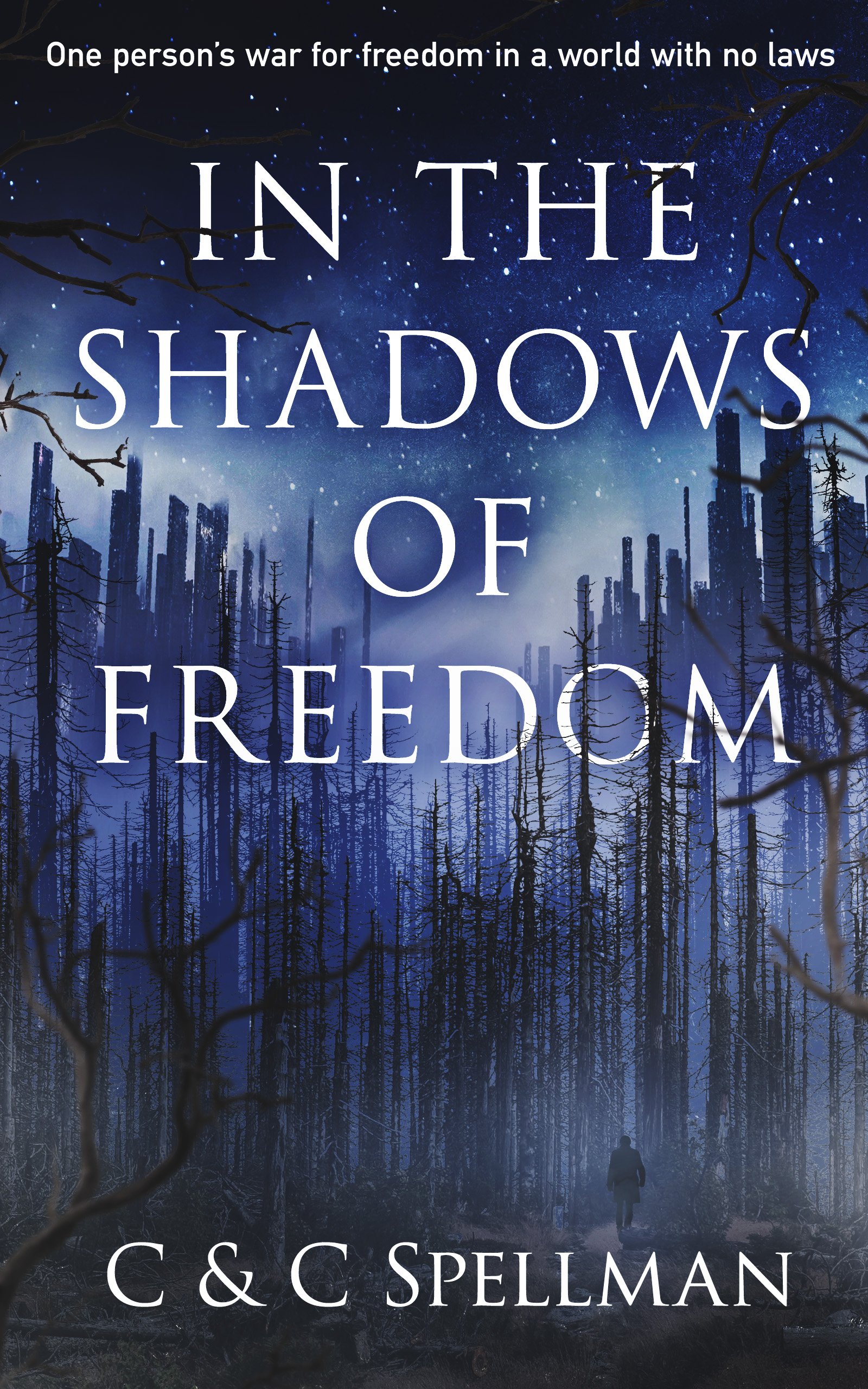
In the midst of the coronavirus restrictions and shut-downs, my husband and I published our debut novel: In the Shadows of Freedom, a Christian dystopian work–the first in a trilogy. We published it during a pandemic, a time that felt very dystopian. Interestingly, one person told me, “The pandemic has ruined the dystopian genre for me.” 

Yet we study history so we don’t commit the mistakes of the past. In the same way, we study literature so we don’t commit the mistakes of the future. Herein one can find the importance of dystopian fiction—and by that, I specifically mean Christian dystopian fiction. Dystopian novels, by definition, focus on a world (usually set in the future) where conditions are marked by oppression, terror, and deprivation. Yet, in a Christian dystopian book, the ultimate point is not a world falling apart: it is a God who redeemed the world, regardless of what might be happening at that specific moment in time. 

Christian dystopian fiction should not end in depression or despair. Rather, it should shine light in the darkness. No matter how corrupted the government, how widespread the persecution, how dismal the chances for victory, the message of a Christian dystopian novel should help the reader maintain his or her trust that God is ultimately the one in control. 

Isn’t that the message we all needed to be reminded of during the pandemic or any other trying season of our life? Our whole life may be uprooted, but God is always a fixed point, our place of refuge and strength. 

One of our goals in writing our Christian dystopian trilogy is to inspire and help readers who feel like they are in darkness. In a dystopian world, we want to encourage people to find the light through the supernatural virtues of faith, hope, and love (the themes of the three novels in our trilogy, respectively). 


In the Shadows of Freedom-2


In our books, the United States of the future is controlled by the National Citizens Party, a political party bent on eliminating as many laws and regulations as possible in the name of freedom. It is a very Darwinistic society, where the best rise to the top and those who can’t (the sick, elderly, disabled) are discarded as the “Unfit.” Those who oppose this agenda of radical freedom face persecution. Our protagonist begins a journey (literally and figuratively) to freedom. Yet, as evil as this government turns out to be, our faith reassures us that no one can take away our interior freedom as sons and daughters of God, except through our own sin. 

We will publish the second novel in the trilogy this month. Titled A Nation of Tyrants, this book focuses on hope in a dystopian world. We can hope for a better government and better society—and indeed, we should actively work toward that goal. Yet, as Christians, our hope cannot rest in this world, which is not our homeland. This world may sometimes feel dystopian, but God made us for the utopian world of heaven: this is the real foundation of our hope! 

So if you find yourself in a dark place, consider picking up a Christian dystopian novel. Walk around in the shoes of a character who similarly struggles, but who also feels God there beside him or her in that struggle. Sometimes the light shines the brightest in the darkest moments. As G.K. Chesterton remarked, “It is only when everything is hopeless that hope begins to be a strength.”